
Have you ever observed how your dog eagerly greets you at the door, tail wagging, eyes bright, and body quivering with excitement, even if they were resting just moments before? This behavior is not merely a habit or a conditioned response; it reflects a deeply ingrained emotional connection shaped by thousands of years of evolution, neuroscience, and psychology.
The question, “Why do dogs love humans?” is among the most frequently asked and intriguing topics in animal behavior science. Dogs are one of the few species that consistently prefer human companionship over that of their own kind. They actively seek humans for comfort, play, security, and emotional reassurance. In contrast, most other domesticated animals such as cats, horses, and birds maintain a degree of emotional independence. Dogs, however, have crossed a psychological threshold that makes them uniquely devoted to people.
This article explores the scientific foundations behind why dogs love humans, examines why this bond extends beyond basic needs such as food or shelter, and considers what it reveals about one of the most extraordinary relationships in the animal kingdom.
THE EVOLUTIONARY ORIGIN – HOW DOGS BECAME HUMANS’ BEST FRIEND
To understand why dogs love humans, we must first return to the origins of the human-dog relationship.
Dogs descended from wolves, but the domestication process that transformed wild, pack-hunting predators into loyal family companions was not simply about taming. It was a profound genetic, behavioral, and psychological transformation that unfolded over approximately 15,000 to 40,000 years.
The leading scientific theory suggests that domestication began when certain wolves started lingering near early human settlements, drawn by the scent of food scraps and waste. The wolves that were less fearful of humans, those with a naturally calmer temperament, were better at surviving in proximity to human camps. These less aggressive individuals fed better, reproduced more, and over generations, their offspring became less and less like wild wolves and more and more like the social, human-friendly animals we know today as dogs.
This process is sometimes called “self-domestication.” The wolves that chose to be near humans were not forced into submission; they were naturally predisposed to tolerance and social openness. Humans, in turn, began to recognize the value of these animals: as hunting partners, guards, and companions. The relationship became mutually beneficial, and the emotional bond deepened across generations.
Remarkably, over thousands of years of co-evolution, dogs did not merely become dependent on humans, they became emotionally attuned to us. Scientific research demonstrates that the brains of domesticated dogs possess uniquely developed social-emotional processing regions compared to wolves. In essence, dogs evolved the biological capacity to form deep emotional bonds with humans; it is embedded in their DNA.
This is a key reason why dogs love humans more than other dogs: their entire evolutionary journey was shaped by closeness to people, not to their own species. Humans became their primary social reference point.
THE NEUROSCIENCE OF DOG LOYALTY – WHAT HAPPENS IN A DOG’S BRAIN
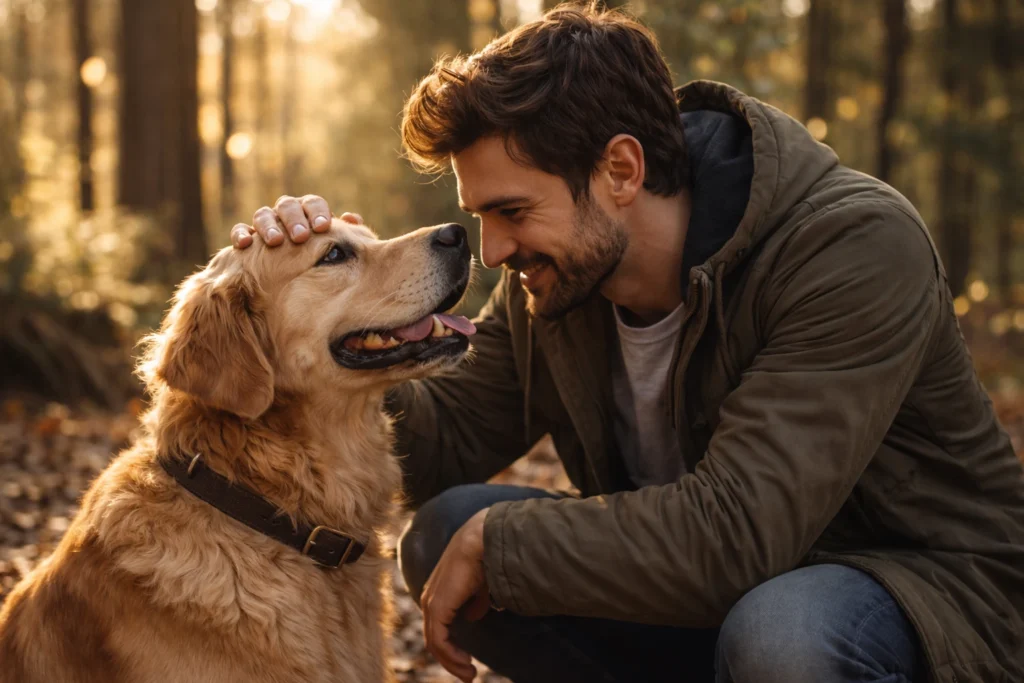
Science has gone far beyond simply observing dog behavior. Using advanced brain imaging technology, researchers have actually looked inside the canine brain to understand why dogs love humans at a neurological level. The findings are extraordinary.
The Oxytocin Connection
One of the most powerful discoveries in this field involves oxytocin, the hormone often called the “love hormone” or “bonding hormone.” Oxytocin plays a central role in social bonding between mothers and infants, between romantic partners, and between close friends. Fascinatingly, the same oxytocin system is activated between dogs and humans.
A landmark 2015 study published in the journal Science, conducted by Miho Nagasawa and colleagues at Azabu University in Japan, found that when dogs and their owners gazed into each other’s eyes, both species showed a significant increase in oxytocin levels. This gaze-based bonding mechanism is the same one that human mothers and babies use to form deep emotional attachments.
What makes this extraordinary is that wolves, even wolves raised by humans, do not show this response. It is unique to domesticated dogs. This suggests that the ability to bond with humans through eye contact was specifically selected for during domestication. Dogs evolved a love hormone response triggered by looking at us.
Dopamine and the Reward System
Brain scan studies conducted by neuroscientist Gregory Berns and his team at Emory University, as described in his book “How Dogs Love Us“, used MRI technology on trained, awake dogs to observe their brain activity. What they found was groundbreaking: the caudate nucleus, a brain region associated with positive emotions, anticipation, and reward, was highly activated in dogs when they smelled or heard their human owners.
The caudate nucleus responded more strongly to familiar human scents than to unfamiliar human scents, to other dogs, or to other familiar animals. Dogs’ brains literally light up for their human companions in a way that mirrors how human brains respond to people they love.
This neurological evidence strongly supports the idea that dogs do not just tolerate humans or depend on us for resources, but they experience something that functions very much like love and emotional attachment toward us.
THE PSYCHOLOGY OF DOG LOYALTY – WHY DOGS CHOOSE HUMANS
Beyond evolution and neuroscience, the psychology of why dogs love humans offers some of the most compelling and heartwarming explanations.
Dogs See Humans as Their Social Group
One of the most fundamental psychological reasons why dogs prefer humans over other dogs is that they have been shaped to view humans, not other dogs, as their primary social family. Unlike wolves, who maintain strong intra-species pack bonds, dogs transfer their natural social bonding instincts to the humans in their household.
This was demonstrated in a fascinating study by researchers at the University of Vienna, who compared how wolves and dogs behaved when faced with an unsolvable problem. Both groups were given a task they could not complete. The wolves persistently tried to solve it on their own. The dogs, however, quickly turned to look at the nearby humans seeking guidance, reassurance, and social input.
This behavior, which researchers call “social referencing,” is something even human toddlers do. It shows that dogs psychologically orient themselves toward humans as authority figures and social companions in a way that wolves and most other animals simply do not.
Attachment Theory and Dogs
Attachment theory, originally developed to describe the emotional bond between human children and their caregivers, has been successfully applied to the dog-human relationship. Research by Jozsef Topal and colleagues in Budapest found that dogs display a classic “secure base effect” with their human owners. They explore more freely, play more confidently, and recover more quickly from stress when their owner is present.
Separated from their owners, dogs show signs of anxiety. Reunited with them, they show signs of relief and joy. This pattern is nearly identical to the attachment behavior seen in human infants with their parents. The implication is profound: dogs do not merely like humans. They form deep psychological attachments to us that parallel the emotional bonds humans form with each other.
Dogs Read Human Emotions
Another remarkable psychological capability that explains why dogs love humans so deeply is their extraordinary ability to read and respond to human emotional cues. Dogs can recognize human facial expressions, distinguishing between happy and angry faces. They can sense fear, sadness, and anxiety from body language and scent. They respond to human emotional distress with comfort-seeking behavior, approaching and leaning into people who are crying or upset.
A 2018 study published in Learning & Behavior found that dogs crossed barriers and came to help their owners when the owners showed signs of distress, and did so faster when the owner appeared upset compared to when they were calm. This suggests not just emotional awareness but something approaching empathy.
This deep emotional synchrony with humans, the ability to feel what we feel, even partially, creates an extraordinary feedback loop of connection. The more dogs respond to our emotions, the more we bond with them; the more we bond with them, the more emotionally responsive they become.

IS DOG LOYALTY REALLY ABOUT FOOD? DEBUNKING THE MYTH
A common cynical argument claims that dogs do not actually love humans; they just love being fed. According to this view, dog loyalty is nothing more than a strategic association between humans and food. The dog is loyal to the source of meals, not to the person themselves.
The science, however, tells a very different story.
Multiple studies have tested whether dogs prefer human interaction over food. In a 2016 study published in Social Cognitive and Affective Neuroscience, neuroscientist Gregory Berns and his team trained dogs to associate different objects with different rewards: food, praise, or nothing. Using brain scans, they found that the majority of dogs showed equal or stronger brain activation in response to praise from their owner than they did to food. About 20% of the dogs actually showed a stronger preference for social approval than for food itself.
This finding is significant. If dogs were purely food-motivated, their brains would consistently light up more for food than for human attention. That is not what happens. Dogs genuinely value our company, our praise, and our emotional connection independently of whether food is involved.
Further evidence comes from studies of dogs who have been adopted from shelters or rescued from neglect. These animals often form rapid and intense emotional bonds with new owners, even before a consistent feeding routine is established. The emotional connection forms first; the food routine follows.
Dogs also mourn human loss. There are countless documented cases of dogs grieving after the death of their human companions, refusing to eat, searching the house for the missing person, and lying near personal belongings. This kind of grief behavior is not explained by food motivation. It is the behavior of an animal that has experienced genuine loss.
WHY DOGS PREFER HUMANS OVER OTHER DOGS
One of the most striking aspects of canine psychology is not just that dogs love humans; it is that they often prefer humans over members of their own species. This is unusual in the animal kingdom and deserves specific attention.
Social Structure Preference
In multi-dog households, dogs do form bonds with each other. They play together, sleep together, and show signs of distress when a companion dog dies or leaves. However, study after study shows that the emotional priority for most domestic dogs is their human, not their dog companions.
Research conducted by Therese Rehn and colleagues at Uppsala University in Sweden showed that dogs greet returning human owners more intensely and with longer duration than they greet familiar dogs. The quality of the reunion behavior tail wagging, vocalization, and body contact, was significantly more pronounced with human owners.
This suggests that in the dog’s emotional hierarchy, humans occupy the top position. Other dogs are friends; humans are family.
The Imprinting Window
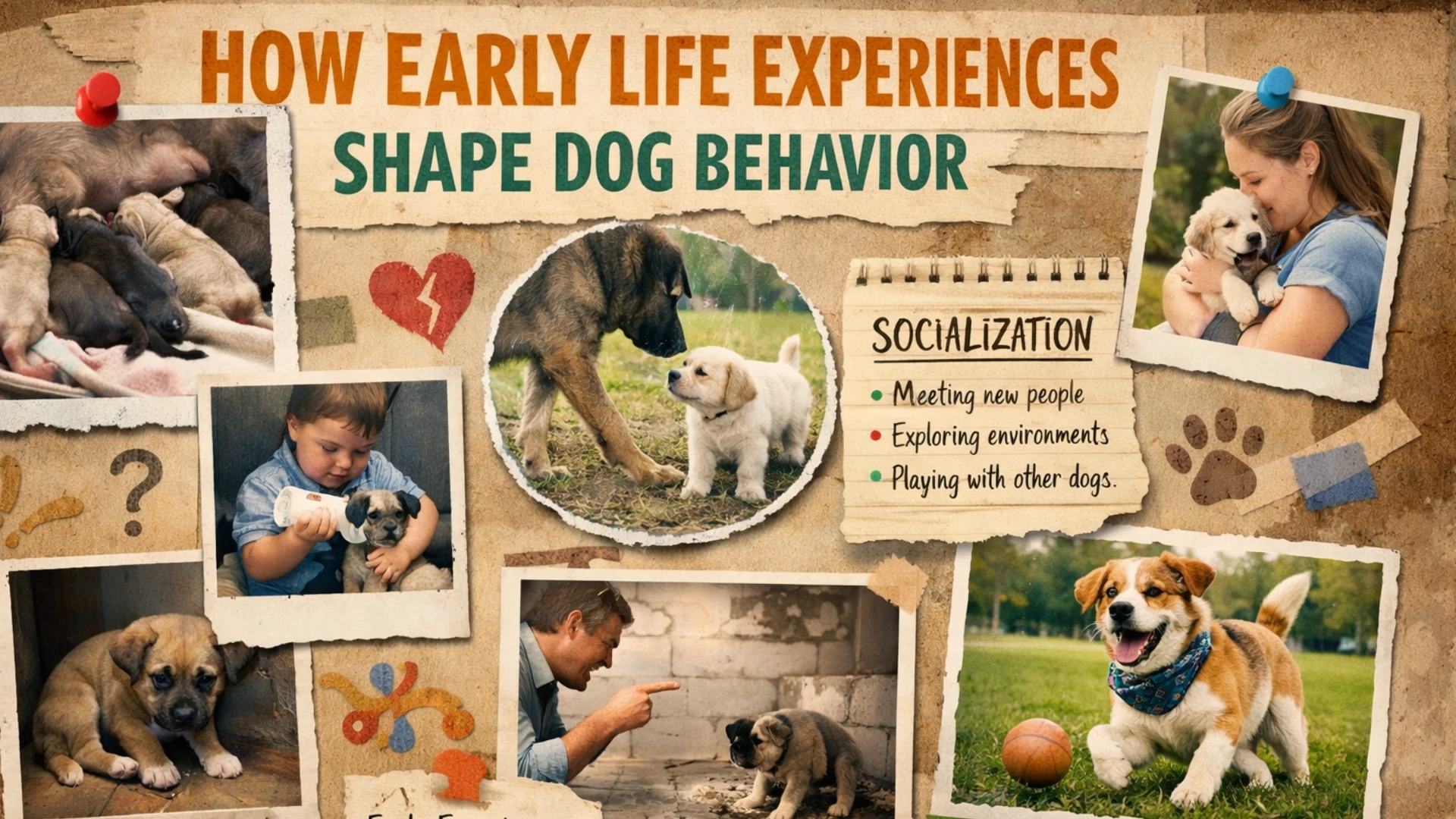
Developmental psychology offers another explanation. Like many animals, dogs go through a critical socialization window in early puppyhood, roughly between 3 and 14 weeks of age. During this period, the experiences and relationships a puppy forms have a lasting influence on their emotional development.
When puppies are socialized extensively with humans during this window, they develop a primary social preference for humans. The human face, human scent, and human voice become deeply familiar and associated with safety, comfort, and pleasure. Dogs raised in this way do not just accept humans, they actively seek them out.
In contrast, feral dogs or dogs with minimal early human socialization tend to be far less bonded to people and more comfortable with other dogs. This shows that while the capacity to love humans is genetically wired into dogs, the intensity of that preference is shaped by early experience.
Communication Compatibility
There is also a remarkable degree of communication compatibility between dogs and humans that does not exist to the same degree between dogs and other dogs. Dogs follow human pointing gestures instinctively, an ability that even chimpanzees, our closest evolutionary relatives, struggle to demonstrate. Dogs track human eye gaze, respond to human vocal tone, and adjust their behavior based on human social cues.
This communicative fluency creates a sense of mutual understanding between dogs and humans that is genuinely rare. Dogs feel understood by humans in a way they may not feel understood by other dogs. This sense of being truly seen and heard, even across species, is a powerful foundation for emotional loyalty.
THE ROLE OF HUMAN BEHAVIOR IN BUILDING DOG LOYALTY
While dogs are biologically predisposed to love humans, the depth and quality of that loyalty is powerfully shaped by human behavior. Understanding this gives dog owners the ability to actively strengthen the bond they share with their pets.
Consistency and Predictability
Dogs thrive on consistency. When humans provide reliable routines, regular feeding times, predictable walks, and consistent rules, dogs develop a strong sense of security. This security is the emotional foundation of deep loyalty. A dog who knows what to expect from their human is a dog who trusts their human completely.
Inconsistent or unpredictable human behavior, on the other hand, can create anxiety in dogs. An anxious dog may still love their owner, but the quality of the bond is compromised by stress and uncertainty.
Positive Reinforcement and Emotional Safety
The way humans train and discipline dogs also profoundly affects the bond. Research consistently shows that dogs trained with positive reinforcement rewards, praise, and play develop stronger, more trusting bonds with their owners than dogs trained with punitive or aversive methods.
Positive training builds a positive emotional association with the owner. The dog begins to connect their human with good feelings: joy, success, reward. Over time, the owner themselves becomes a source of happiness, not just a provider of resources.
Physical Affection and Eye Contact
As noted earlier, mutual gazing between dogs and humans elevates oxytocin in both. Physical affection, such as petting, stroking, and gentle massage, has similar effects. These moments of physical and visual connection are not just pleasant; they are biologically meaningful. They actively strengthen the neurochemical bonds of loyalty and love.
Owners who spend quality time with their dogs, engage in play, and provide regular physical affection consistently report stronger perceived bonds, and the dogs’ behavior confirms it.
FAMOUS STORIES OF DOG LOYALTY THAT PROVE THE SCIENCE
Throughout history, there have been extraordinary real-world stories of dog loyalty that go so far beyond ordinary behavior that they seem almost impossible. Yet these stories perfectly illustrate the science we have discussed.
Hachiko – The Akita Who Waited Nine Years
Perhaps the most famous story of dog loyalty in history is that of Hachiko, a Japanese Akita dog born in 1923. Hachiko was owned by Professor Hidesaburo Ueno of Tokyo, and every day he would accompany his owner to Shibuya Station in the morning and return to meet him in the afternoon when he came home from work.
In May 1925, Professor Ueno suffered a fatal cerebral haemorrhage at work and never returned to the station. Hachiko continued to appear at Shibuya Station at the exact time of his owner’s scheduled return every single day for the next nine years, nine months, and fifteen days until his own death in 1935.
Hachiko’s loyalty was not driven by food, comfort, or habit alone. He waited in rain, cold, and heat, often receiving little attention from passersby. His behavior was a pure expression of emotional loyalty, a bond so deep that even death could not erase it.
Greyfriars Bobby – The Dog Who Guarded a Grave
In Edinburgh, Scotland, a Skye Terrier named Bobby belonged to a man named John Gray, who worked as a night watchman. When John Gray died of tuberculosis in 1858, Bobby refused to leave his graveside in Greyfriars Kirkyard. For fourteen years, until Bobby’s own death in 1872, he spent every night on his owner’s grave, protected by the local community who were moved by his devotion.
These stories are not anomalies. They are extreme expressions of a loyalty that every dog owner witnesses in smaller ways every day: the dog who sleeps by the door, the one who stays close when you are sick, the one whose tail wags most enthusiastically not for strangers or other dogs, but specifically for you.
WHAT MAKES THE HUMAN-DOG BOND UNIQUE IN THE ANIMAL KINGDOM
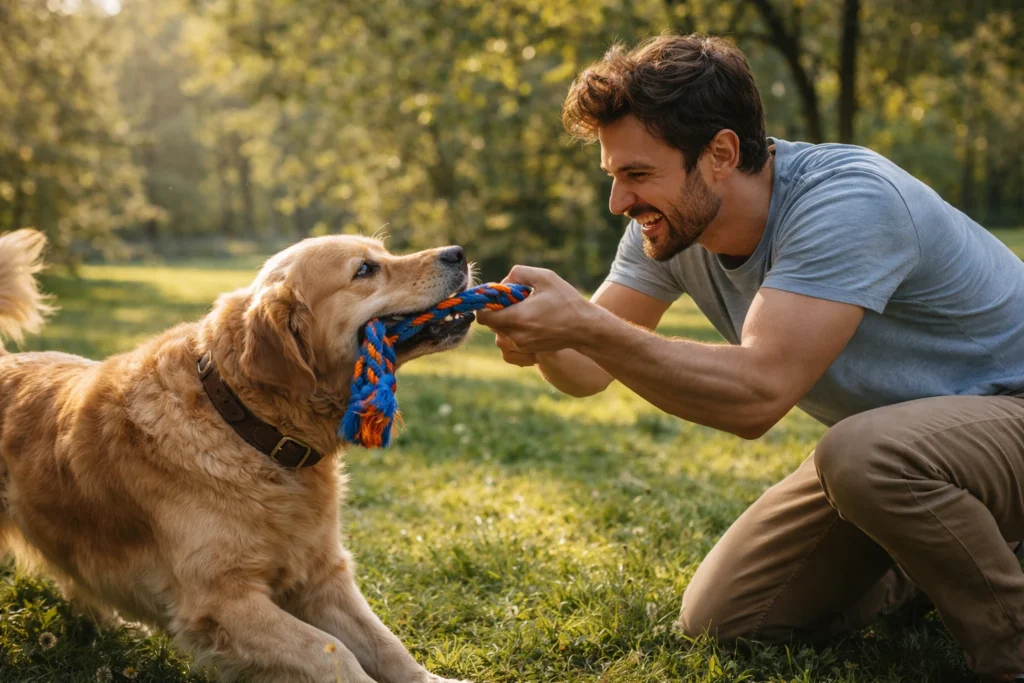
The relationship between humans and dogs is unlike any other human-animal relationship on Earth. It is distinguished by several unique characteristics that, taken together, make it truly extraordinary.
First, it is a cross-species emotional bond that involves mutual, bi-directional attachment. Both parties, human and dog, experience genuine emotional responses to each other. The dog is not simply tolerating the human, and the human is not simply using the dog. There is something that genuinely functions like love on both sides.
Second, the bond involves sophisticated social communication. Humans and dogs can communicate across species in nuanced, reliable ways, like through gesture, gaze, voice, touch, and even shared emotional states. This level of inter-species communication is nearly without parallel.
Third, the bond is shaped by tens of thousands of years of co-evolution. Dogs are not just domesticated animals; they are animals whose psychology, biology, and neurology have been shaped specifically for closeness with humans. We did not just tame dogs. We grew together.
Fourth, dogs show a consistent, measurable preference for human companionship that is not purely resource-based. This is very rare among domesticated animals and speaks to the depth of their emotional orientation toward us.
CONCLUSION
The question of why dogs love humans is answered not by a single fact but by a remarkable convergence of evolution, neuroscience, developmental psychology, and behavioral science. Dogs love humans because they evolved alongside us. They love us because their brains are wired to bond with us through the same neurochemical systems we use to bond with each other. They love us because they see us as their family, their safe base, and their primary social world.
The science of dog loyalty reveals something profound: in all of nature, across millions of species on Earth, only one animal has evolved such a specific, deep, and biologically-rooted capacity to love human beings. That animal is the dog.
The next time your dog runs to greet you at the door, looks up at you with soft eyes, or settles close beside you at the end of a long day, remember: that moment is the product of tens of thousands of years of shared history, co-evolution, and mutual devotion. It is not just a cute habit. It is one of the most extraordinary relationships in the natural world.
And for what it is worth, the science strongly suggests your dog does not just need you.
Your dog loves you.