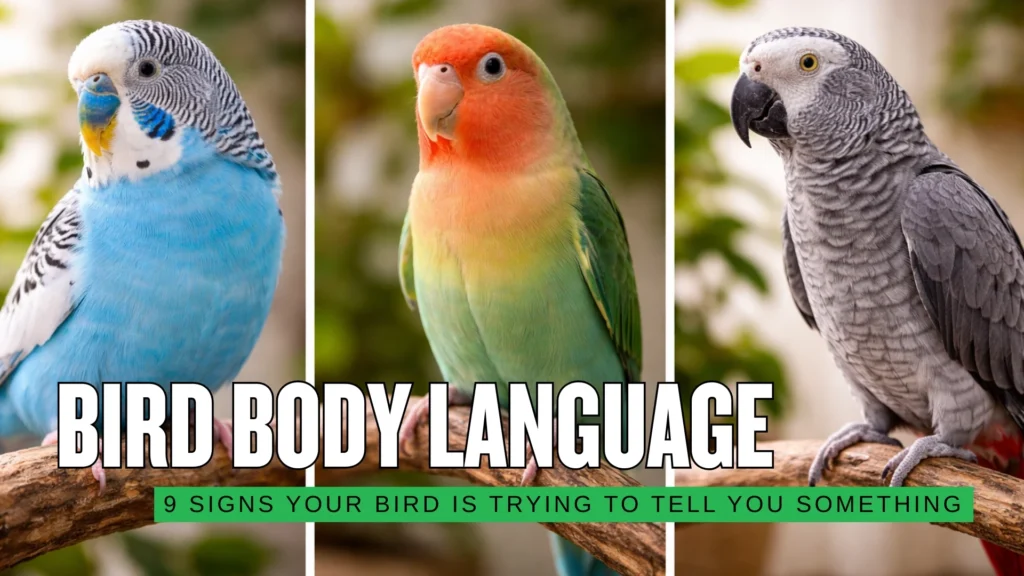

Have you ever looked at your bird and wondered, “What on earth are you trying to tell me?”
You are not alone.
Birds are one of the most expressive animals on the planet, but unlike dogs or cats, they communicate in ways that are easy to misread. A fluffed-up parrot might look adorable, but it could actually be a sign that something is seriously wrong. A bird that bobs its head might be excited, or it might be feeling sick. Understanding bird body language is not just a fun hobby; it is one of the most important skills you can develop as a bird owner.
The good news? Once you learn the basics of bird body language, reading your feathered friend becomes second nature. You will be able to tell when your bird is happy, angry, scared, bored, sick, or simply asking for attention, all without a single word.
In this complete guide, we break down the 9 most important signs of bird body language and what each one really means. Whether you own a parrot, cockatiel, budgie, lovebird, or any other pet bird, this guide will help you communicate on a deeper level with your feathered companion.
Let us dive in.
WHY UNDERSTANDING BIRD BODY LANGUAGE MATTERS
Before we get into the specific signs, it is worth understanding why bird body language is valuable to learn.
Birds are prey animals by nature. In the wild, showing weakness or discomfort can attract predators. This means birds are naturally wired to hide their feelings, especially when they are unwell. By the time a bird shows obvious signs of illness, the condition is often already quite advanced.
This is why learning to read subtle bird body language is so critical. Small changes in posture, feather position, eye expression, and movement can tell you a lot about how your bird is feeling long before any dramatic symptoms appear.
Beyond health concerns, understanding a bird’s body language also helps you build a stronger bond with your pet. Birds are intelligent, social creatures. They want to communicate with their flock, and in a home setting, YOU are their flock. When you learn to understand and respond to their signals, your bird feels seen, understood, and safe.
The result? A happier, healthier, more confident bird and a much more rewarding relationship for you both.
Now, let us look at the 9 signs you need to know.
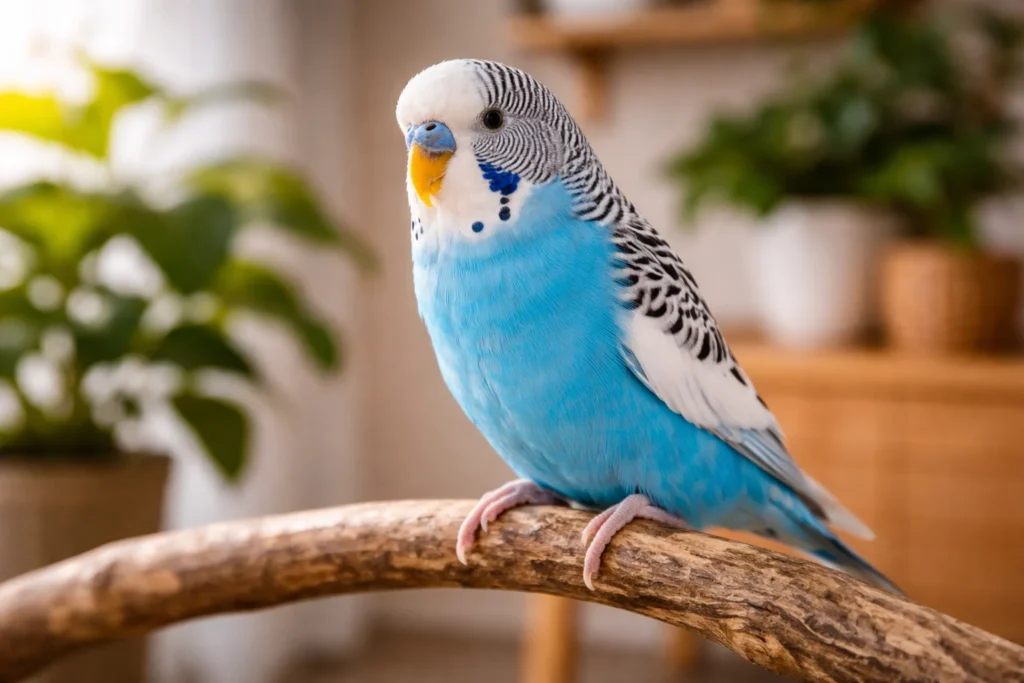
SIGN #1: FEATHER FLUFFING – THE MIXED SIGNAL
One of the most commonly misunderstood signals of bird body language is feather fluffing.
When a bird puffs up its feathers, it traps air between them to regulate body temperature. In small doses, this is completely normal. You will often see your bird fluff up briefly after preening or when settling down for a nap. In this context, feather fluffing is simply your bird getting comfortable; there’s nothing to worry about.
However, prolonged feather fluffing is a major red flag.
If your bird is sitting fluffed up for extended periods, especially if it is also sitting at the bottom of the cage, has its eyes half-closed, or is quiet when it is usually chatty, this is a strong sign that something is wrong. Sick birds fluff their feathers to conserve heat because illness causes them to feel cold even in warm environments.
Key takeaway:
– Brief fluffing = Normal, comfortable behavior
– Prolonged fluffing + lethargy = Possible illness. Consult a vet immediately
Always pay attention to context. A quick fluff after a bath is adorable. A bird that has been fluffed up all morning is cause for concern.
SIGN #2: EYE PINNING – THE EMOTIONAL SPOTLIGHT
Eye pinning is one of the most fascinating and emotionally charged aspects of bird body language, and it is unique to parrots.
Eye pinning (also called “flashing” or “dilating”) is when a bird rapidly alternates between dilating and contracting its pupils. This happens involuntarily and reflects your bird’s emotional state. It is most commonly seen in African Greys, Amazons, Macaws, and Conures.
What does it mean? The answer depends entirely on the context.
Eye pinning with relaxed body language = Excitement and happiness. Your bird is thrilled, perhaps you just offered its favorite treat or picked up its favorite toy.
Eye pinning with a fanned tail, raised feathers on the neck, or a crouched posture = Aggression or overstimulation. This is your bird’s warning signal. If you continue handling a bird that is showing these combined signals, a bite may follow.
Eye pinning while talking or singing = Your bird is highly engaged and in a great mood. Enjoy the moment!
Learning to read eye pinning alongside other body language cues gives you a real-time window into your bird’s emotional world. It is one of the most rewarding aspects of living with a parrot.
SIGN #3: HEAD BOBBING – “I’M HAPPY” OR “I’M HUNGRY”
Head bobbing is another classic piece of bird body language that can mean very different things depending on species, age, and context.
In baby birds, head bobbing is almost always a feeding signal. Young birds bob their heads rhythmically to prompt their parents (or you) to regurgitate food for them. If you have a hand-raised baby bird that bobs its head at you, it is saying: “Feed me, please!”
In adult birds, head bobbing takes on different meanings:
Excitement and playfulness: Many birds, especially budgies, cockatiels, and conures, bob their heads when they are in a great mood. You might see this when music is playing, when you come home, or when you bring out a favorite toy.
Courtship behavior: Head bobbing can be part of a bird’s mating display. If your bird bobs its head toward you, it may actually be trying to court you, which is sweet, if slightly confusing.
Attention-seeking: Some birds learn that head bobbing gets a reaction from their owners. Smart birds will deliberately use it to get you to look at or interact with them.
The speed and intensity of the bobbing often give you a clue: slow, gentle bobbing is usually affection or mild excitement, while fast, frantic bobbing can indicate high excitement or agitation.
SIGN #4: TAIL FANNING AND WAGGING – READING THE TAIL END
Bird body language extends all the way to the tail, and smart bird owners pay close attention to what the tail is doing.
Tail wagging or tail bobbing:
This is generally a positive sign. Many birds wag their tails as a greeting, especially when you come home or approach their cage. It is similar to how a dog wags its tail. A quick, happy wag says: “I am glad you are here!”
Tail fanning:
A fanned-out tail spread wide like a fan is usually a sign of aggression or territorial behavior. Combined with raised wings and eye pinning, a fanned tail is a clear “back off” signal. This is common in Amazon parrots when they are feeling confrontational.
Tail bobbing while breathing:
This is medically significant. If a bird’s tail bobs up and down with every breath, it can indicate a respiratory problem. Healthy birds breathe smoothly without visible tail movement. If you notice this, monitor closely and consult an avian vet.
Slow, rhythmic tail swinging side to side:
Some birds, particularly budgies and small parrots, sway their tails side to side as a sign of contentment. Think of it as a feathered happy dance.
SIGN #5: WING POSITIONING – WHAT THE WINGS SAY
Wings are one of the most expressive tools in a bird’s body language vocabulary. Here is how to decode what different wing positions mean:
Drooping wings:
In young birds that have just been weaned, slightly drooping wings can be normal. However, in adult birds, drooping wings are a warning sign. They can indicate illness, exhaustion, injury, or overheating. If your adult bird is holding its wings away from its body or letting them droop, a vet visit is warranted.
Wing flapping while perched:
When a bird flaps its wings vigorously while staying in one spot, it is usually just exercising, getting a workout without going anywhere. This is healthy and normal. It can also be a way of getting your attention.
Slightly raised wings held away from the body:
This posture, with the wings slightly raised and the feathers ruffled, usually signals aggression or a sense of threat. It is making itself look bigger. Give the bird some space.
Wings spread wide and low:
In combination with a crouched posture, this is a submissive or fearful display. Young birds do this when begging for food. Adult birds may do it when they feel frightened and are trying to appear non-threatening.
Wing flipping:
A quick, single flip of one or both wings is often a communication signal. Your bird might be saying “pay attention to me” or expressing mild frustration or excitement.
SIGN #6: BEAK GRINDING AND CLICKING – SOUNDS FROM THE BEAK
While this entry goes slightly beyond purely visual bird body language, beak sounds are an important communicative tool that every bird owner should understand.
Beak grinding:
This is that soft, rhythmic grinding noise you hear when your bird is sitting quietly, often with one foot tucked up and eyes half-closed. This is one of the best sounds you can hear from your bird. Beak grinding is a sign of deep contentment and relaxation. Your bird is happy, comfortable, and feeling safe. Many birds grind their beaks just before falling asleep.
Beak clicking:
A sharp, rapid clicking sound from the beak is a different matter entirely. This is usually an aggressive signal a warning that your bird is agitated and may bite if pushed further. Combined with raised feathers and a stiff body posture, beak clicking is a clear “leave me alone” message.
Beak wiping:
When your bird rubs its beak back and forth on its perch after eating, it is simply cleaning itself, perfectly normal behavior. However, persistent beak wiping that is not linked to eating can sometimes indicate a respiratory issue or discharge around the beak. Keep an eye on this pattern.
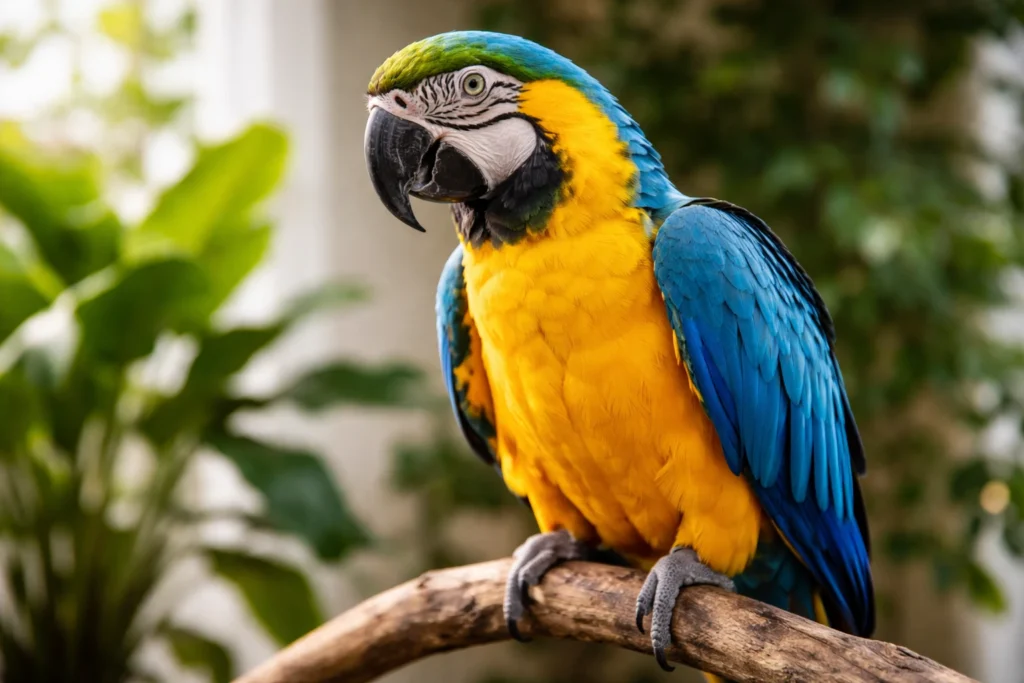
SIGN #7: CROUCHING AND LEANING FORWARD – THE INVITATION POSTURE
Bird body language around posture, specifically crouching and leaning, reveals a lot about what your bird wants from you at any given moment.
The “step up” crouch:
When your bird crouches down, lowers its head slightly, and leans toward you, this is almost always an invitation. Your bird is asking you to pick it up or pet it. This is one of the most welcoming and affectionate bird body language signals you will encounter.
Head bowing for scratches:
If your bird lowers and tilts its head, ruffles the feathers on the back of its neck, and holds still, it is asking for a head scratch. This is a huge sign of trust. In the wild, birds only let their most trusted flock members preen their heads and necks because they cannot see what is being done to those areas.
When your bird asks you to scratch its head, it is essentially saying: “I trust you completely.” Take that seriously and enjoy the bonding moment.
Aggressive lean-forward:
Not all forward leans are invitations. A bird that leans forward with a rigid body, wide eyes, raised nape feathers, and an open beak is not asking for a cuddle; it is getting ready to bite. The difference is in the overall tension of the body. A relaxed, soft-feathered lean is an invitation. A stiff, tense, wide-eyed lean is a warning.
Learning to tell the difference between these two postures could save your fingers.
SIGN #8: REGURGITATION – THE ULTIMATE COMPLIMENT (SORT OF)
This one catches many new bird owners completely off guard, and understandably so.
If your bird begins bobbing its head rhythmically and then brings up partially digested food, offering it to you or depositing it on your hand, you might be horrified. But take a deep breath. This is actually a profound sign of affection.
Regurgitation is how birds feed their mates and their babies in the wild. It is an act of deep love and bonding. When your bird regurgitates for you, it is saying: “You are my mate. You are my family. I want to take care of you.”
This is different from vomiting, which is forceful and uncontrolled and often a sign of illness (look for food scattered on the cage bars or your bird’s chest). Regurgitation is deliberate, gentle, and directed at you.
While it is not the most appetizing display of affection, understanding what it means changes everything. Your bird loves you so much that it wants to feed you. That is about as devoted as it gets in the bird world.
If regurgitation is happening very frequently or seems compulsive, it can sometimes be a sign of hormonal behavior that needs management, but occasional, directed regurgitation is simply a form of love language.
SIGN #9: OVERALL FEATHER POSITION – THE WHOLE PICTURE
We have touched on feathers in several sections, but it is worth stepping back to look at overall feather position as a comprehensive bird body language signal, as it ties everything together.
Sleek, tight feathers:
A bird holding its feathers tightly against its body is either alert and focused on something or feeling frightened or threatened. Think of it as a bird making itself as small as possible, either to stay inconspicuous or because it feels unsafe. Look at what is going on around the bird to determine which applies.
Relaxed, slightly open feathers:
This is the resting neutral position. Your bird is calm, comfortable, and not particularly aroused in any direction. This is good.
Slightly raised crest (in crested birds like cockatiels and cockatoos):
A crest at a 45-degree angle usually signals curiosity and interest. Something has caught your bird’s attention, and it is investigating.
Fully raised crest:
Full crest up in cockatiels and cockatoos can mean either extreme excitement and happiness, or alarm and high stress. Again, context matters. A fully raised crest while playing and chirping is a sign of excitement. A fully raised crest, while staring wide-eyed and frozen, is fear.
Flattened crest:
A crest pressed completely flat against the head usually signals aggression or extreme fear. Combined with a crouched body and open beak, this bird is very unhappy about something.
Ruffled feathers with sunken posture:
A bird that looks generally ruffled, sunken, and dull, especially when combined with tail bobbing while breathing, is showing the classic signs of illness in birds. This is a medical emergency. Do not wait to see if it gets better on its own.
BONUS: HOW TO BUILD BETTER COMMUNICATION WITH YOUR BIRD
Now that you know the 9 key signs of bird body language, here are some practical tips for using this knowledge to deepen your relationship with your bird.
1. Observe before you act.
Before reaching into the cage or handling your bird, spend 10 to 15 seconds just watching. What is the feather position? What is the body posture? What is the tail doing? This quick assessment will tell you whether your bird is in the mood for interaction or whether it needs some space.
2. Respond consistently.
If your bird shows you a sign like lowering its head for a scratch, respond to it. Consistently responding to your bird’s communication signals teaches it that you are paying attention. This builds trust and makes your bird more confident in expressing itself.
3. Never push through warning signs.
If your bird is showing clear signs of agitation, eye pinning with raised feathers, beak clicking, stiff posture, do not push the interaction. Forcing yourself on an unwilling bird erodes trust and increases the risk of biting. Respect the signal. Walk away and try again later.
4. Keep a behavior journal.
Especially when you first bring a bird home, keeping brief notes about your bird’s body language patterns helps you learn its individual personality quickly. Birds, like people, have unique quirks and communication styles. A journal helps you spot patterns and understand what certain behaviors mean, specifically for your bird.
5. Learn species-specific signals.
While much bird body language is universal across pet bird species, different species also have unique signals. African Greys communicate very differently from Amazons. Cockatiels have crest signals that budgies do not. The more you learn about your specific species, the better you will become at reading them.
COMMON MISTAKES BIRD OWNERS MAKE WHEN READING BODY LANGUAGE
Even experienced bird owners sometimes misread signals. Here are the most common mistakes to avoid:
Mistake #1: Reading one signal in isolation.
Bird body language is a full-body conversation. Never base your assessment on a single signal. Always look at the whole bird’s feathers, posture, eyes, tail, wings, and beak before drawing a conclusion.
Mistake #2: Assuming a quiet bird is a happy bird.
Bird silence can actually be a warning sign. A bird that is normally vocal and playful but has gone unusually quiet may be sick or stressed. Behavioral changes, including sudden quietness, should always be investigated.
Mistake #3: Projecting human emotions.
It can be tempting to interpret bird behavior through a human lens, but birds experience and express emotions differently. A bird that bites when you try to put it back in its cage is not being “mean”; it is communicating that it does not want the interaction to end. Understanding the bird’s perspective makes all the difference.
Mistake #4: Ignoring body language during handling.
Many bird bites happen not because the bird is aggressive, but because the owner ignored clear warning signs during handling. Pay attention to your bird’s body language throughout every interaction, not just at the beginning.
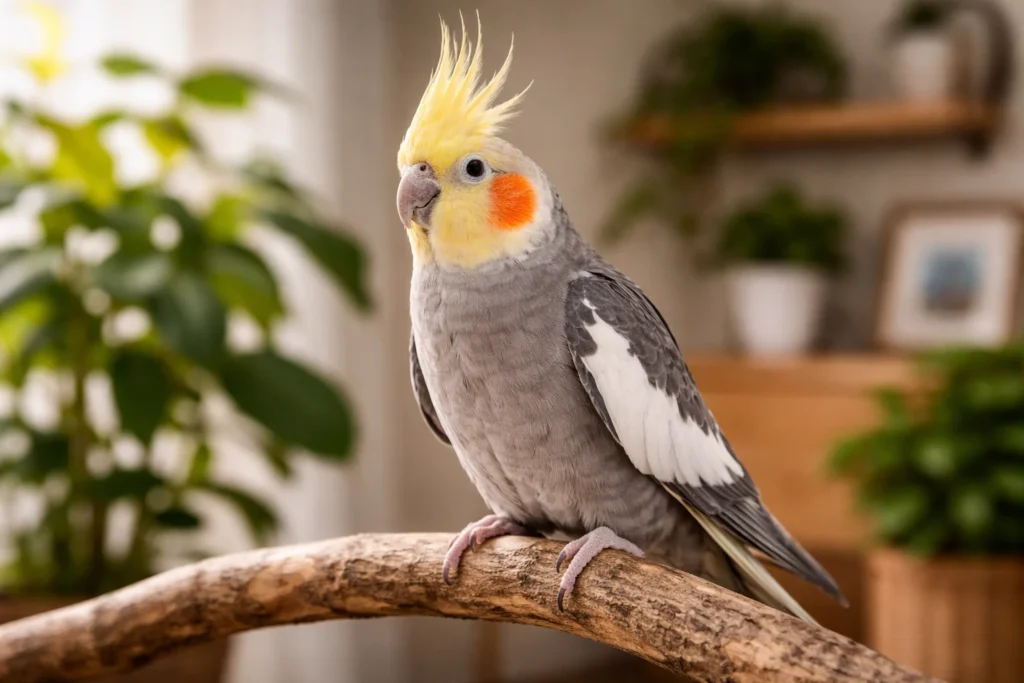
WHEN TO CALL THE VET: RED FLAG BODY LANGUAGE SIGNALS
Some bird body language signals are medical emergencies. Never wait and see with these:
– Prolonged feather fluffing lasting more than a few hours, especially with lethargy
– Tail bobbing with every breath (respiratory distress)
– Drooping wings in an adult bird are not linked to heat
– Open-mouth breathing or clicking/wheezing sounds
– Sitting on the floor of the cage (birds instinctively perch when healthy)
– Loss of balance or inability to grip the perch
– Ruffled, dull feathers combined with reduced activity and loss of appetite
Birds decline rapidly when ill. If you see these signals, contact an avian veterinarian the same day. Do not wait.
CONCLUSION
Understanding bird body language is one of the greatest gifts you can give both yourself and your pet bird.
When you can read what your bird is feeling, when you can tell the difference between “please pet me” and “leave me alone,” between contentment and illness, between excitement and aggression, your entire relationship transforms. You stop guessing and start communicating. Your bird feels understood. You feel more confident. The bond between you deepens in a way that is difficult to describe but impossible to miss.
The 9 signs we covered in this guide, feather fluffing, eye pinning, head bobbing, tail fanning and wagging, wing positioning, beak grinding and clicking, crouching and leaning, regurgitation, and overall feather position, give you a solid foundation for reading your bird’s emotional and physical state every single day.
Start by picking just two or three of these signals and focusing on them during your next few interactions with your bird. Notice the context. Notice how the signals combine. Within a week, you will start to see patterns you never noticed before.
The secret language of birds is not actually that secret. It is right there, on display, every moment you spend with your feathered friend. You just needed to know what to look for.
Now you do.