
Dog aggression is one of the most misunderstood and concerning behavioral problems that dog owners face. Whether it’s a low growl at a stranger, snapping at a child, or full-blown attacks on other animals, aggressive behavior in dogs can be frightening and dangerous. Yet many people still believe that aggression is simply “in the breed” or that aggressive dogs are just “bad dogs.”
Before diving deeper, let’s clarify the real reasons behind this behavior.
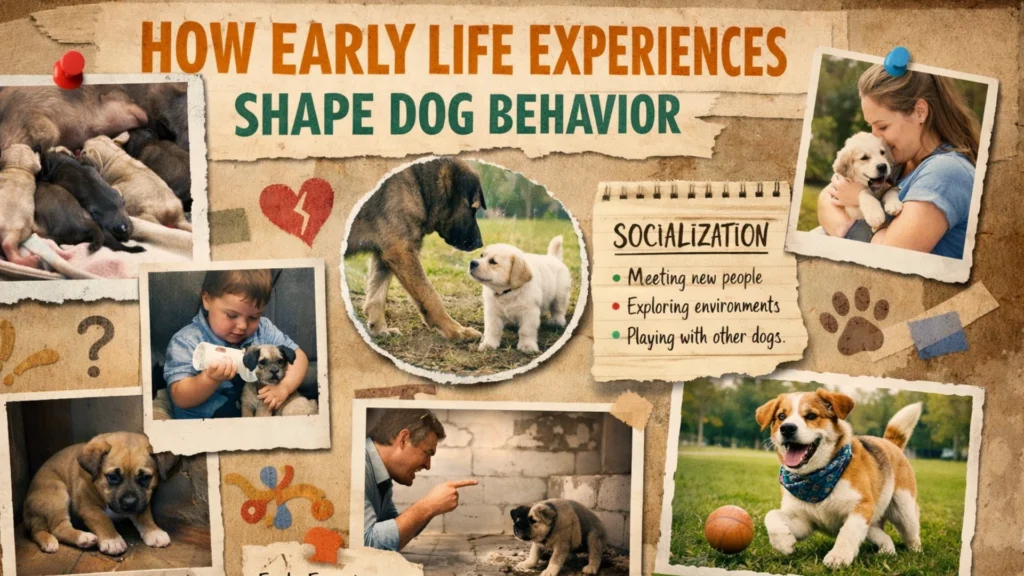
Dog aggression is rarely random. It is almost always the result of a complex mix of genetics, environment, early socialization, trauma, and the experiences a dog has in its most critical developmental windows. Understanding why some dogs become aggressive and how early life shapes that outcome is the first step toward prevention, management, and rehabilitation.
In this comprehensive guide, we’ll explore the science behind dog aggression, break down the different types of aggressive behavior, and reveal how the earliest weeks and months of a dog’s life can determine whether it grows up confident and calm or fearful and reactive.
Whether you’re a new dog owner, a breeder, a trainer, or someone dealing with an already-aggressive dog, this article will give you the knowledge you need to make informed decisions.
WHAT IS DOG AGGRESSION?(UNDERSTANDING THE BASICS)
Before diving into causes and solutions, it’s important to understand what dog aggression actually means.
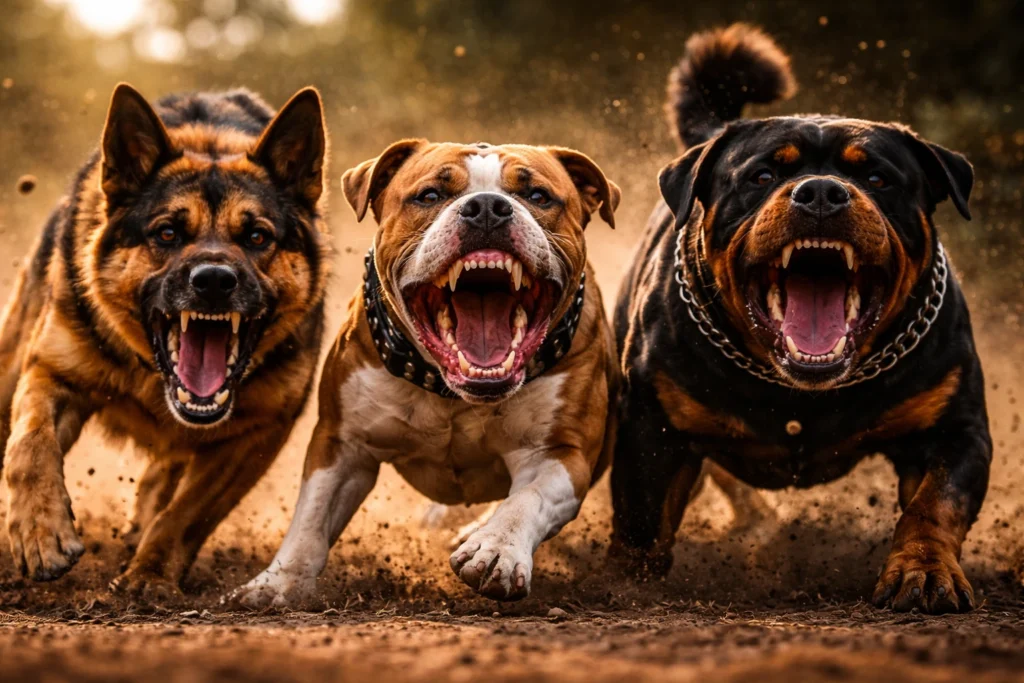
Dog aggression refers to a range of threatening or harmful behaviors directed at people, other animals, or even objects. These behaviors exist on a spectrum from subtle warning signals like stiffening and staring, all the way to biting and sustained attacks.
Common signs of dog aggression include:
- Growling or snarling
- Showing teeth (lip curling)
- Stiff body posture
- Intense, fixed staring
- Snapping or biting
- Lunging or charging
- Raised hackles (piloerection)
- Barking in an aggressive, low tone
It’s critical to note that not all aggression looks the same, and not all of it is “offensive.” Some dogs become aggressive out of fear. Others act out of resource guarding, pain, or redirected frustration. Understanding the type of aggression is key to addressing it appropriately.
WHY DOG AGGRESSION SHOULD NEVER BE IGNORED
A common mistake dog owners make is dismissing early warning signs like growling, not realizing that this is a form of communication. Punishing growling suppresses warning signals instead of the underlying emotion, potentially leading to bites without warning signals and greater danger.
Dog aggression, if left unaddressed, tends to escalate over time. What starts as a growl at strangers can become biting. What begins as guarding food can extend to guarding furniture, people, and entire rooms. Early intervention is always more effective than waiting.
TYPES OF DOG AGGRESSION
Dog aggression is not a single condition; it is an umbrella term covering many different types of aggressive behavior, each with its own triggers and underlying causes.
- FEAR-BASED AGGRESSION
Fear aggression is one of the most common forms of dog aggression. Dogs that have not been properly socialized, or that have experienced trauma or abuse, often react aggressively when they feel threatened. The logic is simple: when a dog cannot escape a scary situation, it may choose to fight instead.
Fear-aggressive dogs often show “distance-increasing signals”; they want to make the scary thing go away. These dogs may snap when cornered, bite when restrained, or lunge when a stranger approaches too quickly.
- TERRITORIAL AGGRESSION
Some dogs become aggressive when protecting their perceived territory, such as a home, yard, car, or favorite spot. Territorial aggression is often directed at strangers or unfamiliar animals entering the dog’s space. While this can be useful in guard dogs, it becomes a problem when not managed properly.
- RESOURCE GUARDING AGGRESSION
Resource guarding occurs when a dog becomes aggressive to protect something it values, such as food, toys, a resting spot, or even a person. Dogs that were forced to compete for food as puppies, or that experienced scarcity, are more prone to resource guarding behaviors.
- PAIN-INDUCED AGGRESSION
A dog in pain may bite or snap even when approached by someone it normally trusts. This is a purely reactive response, not a personality trait. Older dogs with arthritis, dogs recovering from surgery, or dogs with hidden injuries may suddenly display aggression that seems to come out of nowhere. Always rule out a medical cause before assuming a behavioral one.
- REDIRECTED AGGRESSION
Redirected aggression happens when a dog is aroused or frustrated by something it cannot reach, for example, seeing another dog through a fence, and redirects that aggression toward a nearby person or animal. This can be particularly alarming because the victim seems unrelated to the trigger.
- PREDATORY AGGRESSION
This is different from other forms of aggression because it’s often silent, no warning growls, no stiff posture before the attack. Predatory aggression is triggered by fast-moving objects or animals that activate a dog’s prey drive. This type is most dangerous around small children or small pets.
- DOMINANCE/STATUS-RELATED AGGRESSION
While the concept of “dominance” in dogs has been largely misrepresented in popular culture, some dogs do display aggression related to social status, particularly within multi-dog households. This behavior is more accurately described as conflict aggression and is often rooted in anxiety and poor communication between dogs.
THE ROLE OF GENETICS IN DOG AGGRESSION
Genetics play an undeniable role in dog behavior. Thousands of years of selective breeding have shaped different dog breeds for different purposes: herding, guarding, hunting, and companionship. These purposes have left genetic imprints on temperament and behavioral tendencies.
Certain breeds were historically bred to be protective or assertive, such as German Shepherds, Rottweilers, and Dobermans, for example. Others were bred for high prey drive, like Siberian Huskies or Greyhounds. This doesn’t mean these breeds are inherently dangerous; it means their instincts are strong, and they require experienced owners, proper training, and consistent socialization.
GENETICS VS ENVIRONMENT: THE ONGOING DEBATE
The debate over nature vs nurture in dog behavior is ongoing, but most experts agree that it’s never one or the other; it’s always both. Genetics set the stage, but environment directs the performance.
A dog genetically predisposed to nervousness might develop severe fear aggression if raised in a chaotic, abusive, or understimulating environment. The same dog, raised in a calm, enriched home with early socialization, might become a well-adjusted family pet.
Conversely, even a dog with a calm genetic temperament can develop aggression if subjected to chronic abuse, extreme neglect, or traumatic experiences.
“The takeaway: genetics loads the gun, but environment pulls the trigger.“
THE CRITICAL DEVELOPMENTAL WINDOWS IN PUPPIES
Understanding early life development is perhaps the most important piece of the dog aggression puzzle. Dogs go through several sensitive periods during puppyhood when their brains are highly plastic, meaning experiences during these windows can change how their brains develop and have an outsized impact on long-term behavior.
THE NEONATAL PERIOD (0–2 WEEKS)
During the first two weeks of life, puppies are almost entirely dependent on their mother. Their eyes and ears are closed, and their nervous systems are still developing. Even at this early stage, gentle handling by humans can create positive neurological changes. Research shows that mild stress, like being briefly held by a human during the neonatal period, can actually improve stress tolerance later in life. (Mild stress means brief, harmless handling of a puppy.)
THE TRANSITIONAL PERIOD (2–3 WEEKS)
This brief window sees rapid neurological development. Puppies begin to open their eyes and ears, start to walk, and begin interacting with their littermates. The social bonds formed during this period begin to take shape.
THE SOCIALIZATION WINDOW (3–12 WEEKS)
This is the single most important developmental period in a dog’s life, and it is the window most closely tied to future aggression or stability.
During this period, especially between 3 and 7 weeks, puppies are primed to learn what is safe and what is dangerous. Their brains are actively cataloging experiences, sounds, sights, textures, and social interactions. Whatever a puppy encounters (or doesn’t encounter) during this window shapes its lifelong emotional responses.
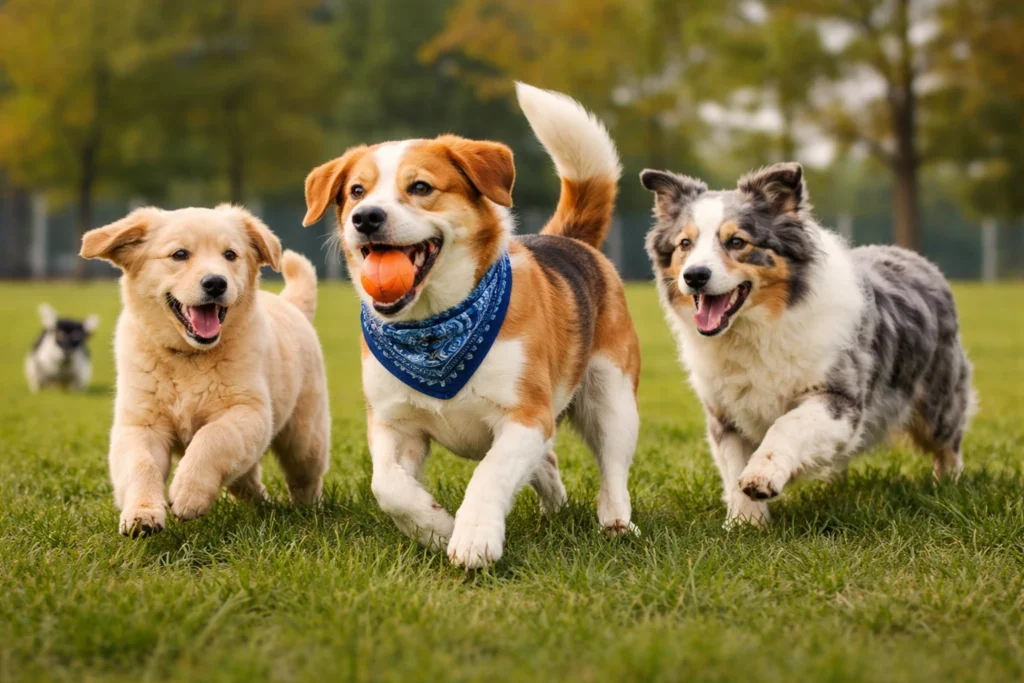
Puppies that are well-socialized during this period, exposed to different people, children, other animals, sounds, environments, and surfaces tend to grow into confident, adaptable, non-aggressive adult dogs.
Puppies that are isolated, poorly socialized, or exposed to traumatic experiences during this window are at significantly higher risk for fear, anxiety, and aggression later in life.
Key experiences that should happen during the socialization window:
- Meeting a wide variety of people (men, women, children, elderly, people with hats, uniforms, beards, etc.)
- Exposure to different animals (other dogs, cats, livestock, if relevant)
- Handling of paws, ears, mouth, and body by humans
- Exposure to different sounds (traffic, appliances, children playing, thunder)
- Riding in cars
- Walking on different surfaces (grass, tile, gravel, stairs)
- Visiting different environments (parks, stores, neighborhoods)
THE JUVENILE PERIOD (3–6 MONTHS)
After the primary socialization window closes, dogs enter the juvenile period. They are still learning rapidly, but it becomes harder, though not impossible, to introduce new experiences without creating fear. Dogs that missed critical socialization during the 3–12 week window can still make significant progress with patient, positive-reinforcement-based exposure work during this period.
THE ADOLESCENT PERIOD (6–18 MONTHS)
Adolescence in dogs is a notoriously challenging time. Hormonal changes, growing confidence, and a “second fear period” around 6–14 months can lead to seemingly sudden behavioral changes, including the emergence of aggression in dogs that seemed fine before. Dogs that were not well-socialized as puppies are especially vulnerable during adolescence.
HOW EARLY TRAUMA AND ABUSE CAUSE DOG AGGRESSION
One of the most heartbreaking causes of dog aggression is early trauma. Dogs that were abused, neglected, or subjected to violence in their early months carry those experiences with them often for life.
HOW ABUSE SHAPES THE BRAIN
Chronic stress and trauma during critical developmental periods can physically change the structure of a dog’s brain. The amygdala, the brain’s fear and threat-detection centre, becomes hyperactivated in dogs that experienced early trauma. These dogs are essentially stuck in a state of heightened vigilance, always scanning for threats, always ready to react.
This is not a character flaw; it is neurological programming. The dog’s brain learned, quite reasonably, that the world is dangerous. Aggression becomes a survival strategy.
SIGNS THAT A DOG HAS AN ABUSIVE OR TRAUMATIC PAST
- Flinching when a hand is raised
- Cowering or hiding in corners
- Aggressive reactions to fast movements
- Fear of specific types of people (men, tall people, people in uniforms)
- Extreme reactions to certain sounds (raised voices, loud noises)
- Difficulty making eye contact
- Unpredictable aggression that seems disproportionate to the trigger
REHABILITATION IS POSSIBLE – BUT TAKES TIME
Dogs that have experienced early trauma can improve significantly with the right approach. The key elements of successful rehabilitation include:
- A calm, consistent, safe environment
- Positive reinforcement-based training (never punishment-based)
- Gradual, controlled exposure to triggers (desensitization and counter-conditioning)
- Patience measured in months and years, not days
- Professional guidance from a certified behaviorist or trainer
THE IMPACT OF MOTHER-PUPPY SEPARATION
One factor that is often overlooked in discussions about dog aggression is the timing of mother-puppy separation.
Many puppies are separated from their mothers and littermates far too early, sometimes at just 4 or 5 weeks old, often due to commercial breeding practices focused on profit rather than welfare.
This is deeply problematic for behavioral development.
Between 3 and 7 weeks, puppies learn critical dog-to-dog communication skills from their mother and siblings. They learn bite inhibition, how hard they can bite before it causes pain and social rejection. They learn to read and respond to body language. They learn how to play appropriately and how to de-escalate conflict.
Puppies removed before 7–8 weeks miss out on these lessons. The consequences often include:
- Poor bite inhibition (biting too hard)
- Difficulty reading canine social signals
- Increased conflict with other dogs
- Higher rates of fear and anxiety
- Greater likelihood of aggression
The recommended minimum age for puppy rehoming is 8 weeks, with many experts suggesting 10–12 weeks is even better for behavioral development.
THE ROLE OF PUNISHMENT IN CREATING AGGRESSIVE DOGS
This is a topic that many dog owners find uncomfortable, but it is critically important.
Punishment-based training methods, particularly those involving physical force, pain, or intimidation, are one of the most significant human-caused contributors to dog aggression.
HOW PUNISHMENT CREATES AGGRESSION
When a dog is physically punished, hit, kicked, alpha-rolled, choke-chained, or shocked, it experiences pain and fear. If this happens repeatedly, the dog begins to associate people, handling, or specific contexts with pain and threat. The natural response is defensive aggression.
Studies published in the journal Applied Animal Behaviour Science have consistently found that dogs trained with aversive methods show significantly higher rates of aggression, fear, and anxiety than dogs trained with reward-based methods.
Additionally, as mentioned earlier, punishing warning signals like growling suppresses communication without addressing the underlying emotion, making dogs more dangerous, not less.
THE EVIDENCE IS CLEAR
A landmark study from the University of Pennsylvania found that confrontational training techniques, including hitting, dominance downs, and staring down, provoked aggression in a significant percentage of dogs tested. Non-confrontational methods showed no such effect.
The scientific consensus among veterinary behaviorists, certified applied animal behaviorists, and leading training organizations worldwide is clear: positive reinforcement is safer, more effective, and produces dogs with better long-term behavioral outcomes.
BREED-SPECIFIC LEGISLATION AND THE MYTH OF THE “DANGEROUS BREED”
No discussion of dog aggression would be complete without addressing Breed-Specific Legislation (BSL) laws that restrict or ban ownership of certain dog breeds based on appearance.
BSL is built on the premise that certain breeds, most commonly Pit Bulls, Rottweilers, and German Shepherds, are inherently more dangerous than others. The science, however, does not support this view.
WHAT THE RESEARCH SAYS
The American Veterinary Medical Association (AVMA), the Centers for Disease Control and Prevention (CDC), the American Kennel Club (AKC), and virtually every major animal welfare organization oppose breed-specific legislation. Their position is based on evidence showing:
- Dog bite statistics by breed are unreliable due to misidentification.
- No single breed is responsible for the majority of serious bites.
- Individual temperament, socialization, training, and owner behavior are far more predictive of aggression than breed.
- BSL has not been shown to reduce dog bites in communities where it has been enacted
Any dog, regardless of breed, can become aggressive under the right (or wrong) circumstances. And any dog, regardless of breed, can be a safe, loving companion given proper socialization, training, and care.
HOW TO PREVENT DOG AGGRESSION – PRACTICAL TIPS FOR OWNERS
Prevention is always more effective than treatment. Here are evidence-based strategies for preventing dog aggression from developing in the first place.
- CHOOSE YOUR DOG WISELY
Research about breeds carefully before adopting. Consider the dog’s energy level, protective instincts, prey drive, and typical temperament. If adopting an adult dog, ask shelters and rescues about the dog’s history, and request a behavioral assessment before bringing the dog home.
- SOCIALIZE EARLY AND OFTEN
Begin socialization as early as safely possible, even before the puppy vaccination series is complete. The American Veterinary Society of Animal Behavior (AVSAB) states that the risk of behavioral problems from under-socialization is greater than the risk of disease from careful, controlled early exposure.
Enroll in puppy classes, arrange playdates with vaccinated, friendly dogs, and expose your puppy to as many safe, positive experiences as possible before 12 weeks.
- USE POSITIVE REINFORCEMENT TRAINING
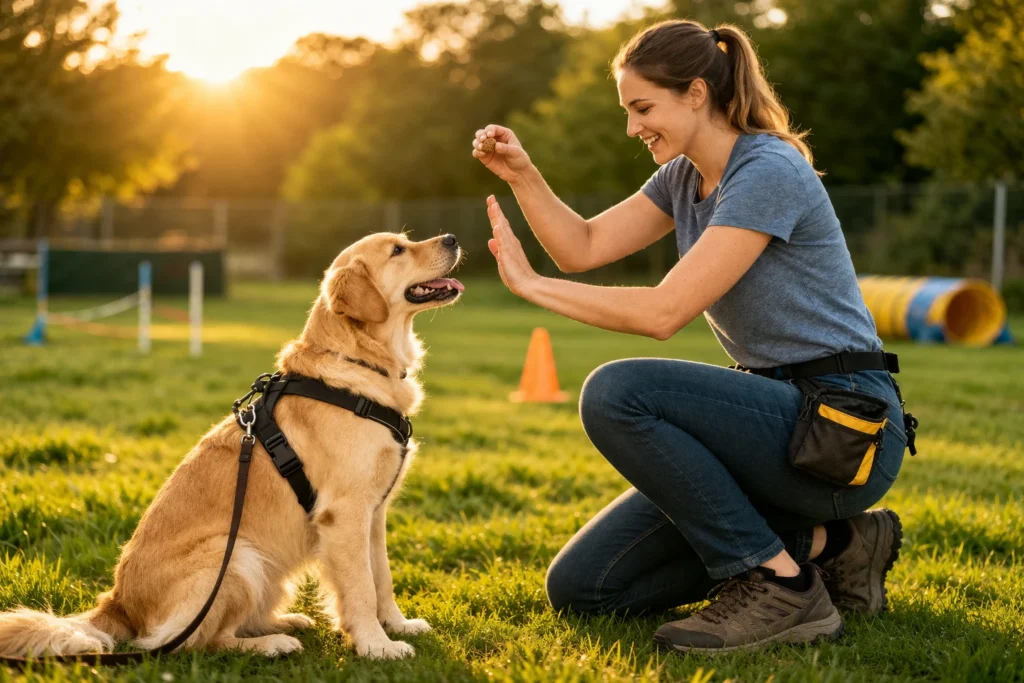
Reward-based training builds confidence, trust, and communication. Avoid punishment-based methods entirely. Work with a certified trainer who uses science-based, force-free techniques.
- LEARN CANINE BODY LANGUAGE
Understanding what your dog is communicating is one of the most valuable skills you can develop. Learn to recognize stress signals, calming signals, and warning signs. This allows you to intervene before aggression escalates.
- NEVER SUPPRESS GROWLING
Growling is communication. If your dog growls, take it seriously, but don’t punish it. Instead, remove your dog from the situation and work with a professional to understand and address the underlying cause.
- PROVIDE ADEQUATE MENTAL AND PHYSICAL STIMULATION
A bored, under-exercised dog is more likely to become frustrated and reactive. Ensure your dog gets daily physical exercise and mental enrichment appropriate to its breed and energy level.
- SEEK PROFESSIONAL HELP EARLY
If you notice signs of aggression in your dog, even mild ones, don’t wait. Consult a veterinarian to rule out medical causes, and work with a certified behaviorist or trainer experienced in aggression. Early intervention dramatically improves outcomes.
TREATING EXISTING DOG AGGRESSION – WHAT ACTUALLY WORKS
If your dog is already displaying aggressive behavior, the most important message is this: don’t give up, and don’t go it alone.
STEP 1: VETERINARY ASSESSMENT
Always start with a full veterinary exam. Pain, hormonal imbalances, neurological issues, and thyroid problems can all contribute to aggression. Treat any underlying medical issues first.
STEP 2: PROFESSIONAL BEHAVIORAL ASSESSMENT
Work with a certified veterinary behaviorist (Dip. ACVB), a certified applied animal behaviorist (CAAB), or a highly qualified positive reinforcement trainer. These professionals can identify the type and triggers of aggression and create a customized behavior modification plan.
STEP 3: BEHAVIOR MODIFICATION TECHNIQUES
The gold standard for treating fear and anxiety-based aggression is a combination of:
- Desensitization: Gradually exposing the dog to its trigger at a level below threshold (where it remains calm) and slowly increasing intensity over time.
- Counter-conditioning: Pairing the trigger with something highly positive (like high-value treats) to change the dog’s emotional response from fear/threat to anticipation/positive association.
This process requires patience, consistency, and professional guidance. It cannot be rushed.
STEP 4: MEDICATION WHEN APPROPRIATE
In some cases, veterinary-prescribed medication can be an important part of treatment, not as a permanent solution, but as a tool to reduce anxiety enough for behavior modification to be effective. Medication is not “giving up”; it is humane, evidence-based care.
STEP 5: MANAGEMENT AND SAFETY
While working through behavior modification, manage your dog’s environment to prevent dangerous situations. This may include muzzle training, using baby gates or crates, avoiding known triggers, and ensuring your dog is always on leash in public. Management is not a cure; it is a safety strategy.
THE EMOTIONAL EXPERIENCE OF LIVING WITH AN AGGRESSIVE DOG
It’s worth acknowledging that living with an aggressive dog is genuinely hard. It can be isolating, stressful, and emotionally exhausting. Many owners feel shame, guilt, or fear, and many are tempted to give up.
If you are in this situation, please know that you are not alone and that reaching out for professional help is a sign of strength, not failure. Many dogs with severe aggression histories go on to live happy, managed, and largely incident-free lives in the hands of committed, informed owners.
Support communities for owners of reactive and aggressive dogs exist online and in person. Finding these communities can be transformative both for the dog and the owner.
UNDERSTANDING DOG AGGRESSION CHANGES EVERYTHING
Dog aggression is not a mystery. It is not a sign of inherent evil, an irredeemable personality flaw, or proof that a dog is unworthy of love. It is behavior and behavior has causes, and causes can be understood, addressed, and in many cases, changed.
The evidence is overwhelming: early life experiences, such as the quality of socialization, the presence or absence of trauma, the training methods used, and the timing of key developmental events, play a profound role in shaping whether a dog becomes aggressive or stable.
Genetics matter. Breed matters. But what happens in those first weeks and months of a dog’s life matters most of all.
As dog owners, breeders, trainers, and advocates, we have the power to influence those early experiences. We can choose socialization over isolation, positive reinforcement over punishment, compassion over force, and education over fear.
When we do, we raise better dogs. And we become better people in the process.