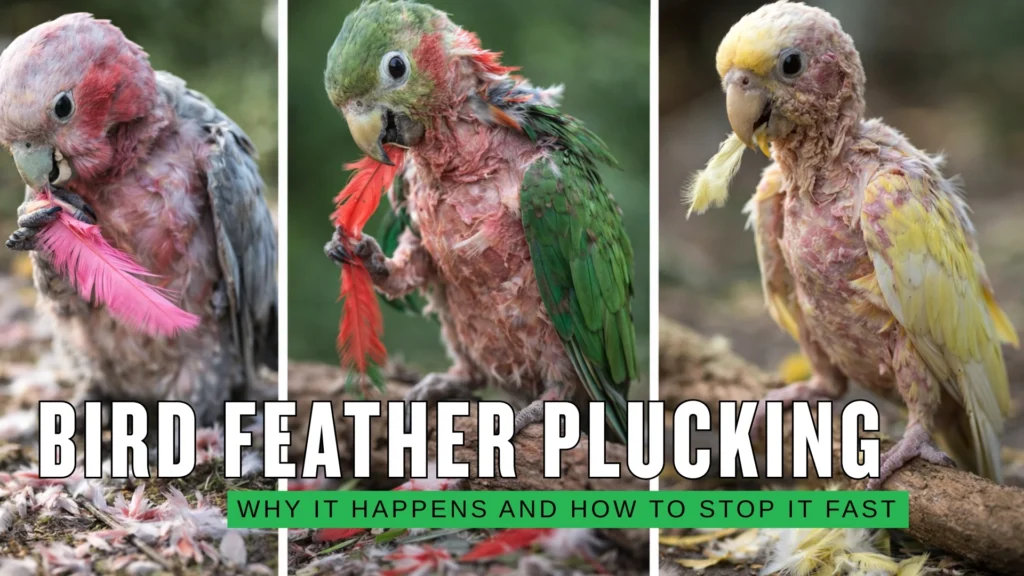

If you have ever walked into the room to find your beloved pet bird surrounded by a pile of its own feathers, you know how alarming that moment can be. Bird feather plucking, also called feather destructive behavior or pterotillomania, is one of the most common and heartbreaking problems that bird owners face. It is not just a cosmetic issue. When a bird repeatedly pulls out its own feathers, it is often a sign that something is seriously wrong physically, emotionally, or environmentally.
The good news? Bird feather plucking is a treatable condition in most cases. With the right knowledge, a little patience, and sometimes professional help, you can identify the root cause and help your feathered companion recover fully.
In this comprehensive guide, you will learn everything you need to know about bird feather plucking, what it is, why it happens, how to recognize it early, and most importantly, how to stop it fast. Whether you own a parrot, cockatiel, African grey, lovebird, or any other pet bird, this guide is for you.
WHAT IS BIRD FEATHER PLUCKING?
Bird feather plucking is a behavioral disorder in which a bird deliberately removes its own feathers using its beak. This is different from normal molting, where old feathers naturally fall out, and new ones grow in. During a molt, the shedding is even, and the bird does not appear distressed. In feather plucking, however, the bird is actively and repeatedly pulling, chewing, or barbering its feathers, often leaving behind bald patches, irritated skin, or even open wounds.
The behavior can range from mild, occasional over-preening or chewing of feather tips to severe, where the bird strips itself almost completely bare, except for the areas it cannot reach with its beak, such as the top of the head.
Feather plucking is most commonly seen in parrots, particularly species such as:
– African Grey Parrots
– Amazon Parrots
– Cockatoos
– Macaws
– Cockatiels
– Conures
– Lovebirds
– Eclectus Parrots
While any bird can potentially develop feather-plucking behaviour, parrots are especially prone because of their high intelligence, emotional sensitivity, and strong social bonding instincts.
It is important to distinguish between feather plucking and feather molting:
Molting: Natural, seasonal, even feather replacement. No bald patches. No irritated skin. Bird appears calm.
Feather Plucking: Uneven bald patches, especially on the chest, abdomen, and inner wings. Bird may appear agitated, anxious, or obsessive. Feathers are actively removed, not shed.
Early recognition is key. The sooner you identify feather plucking, the easier it is to treat.
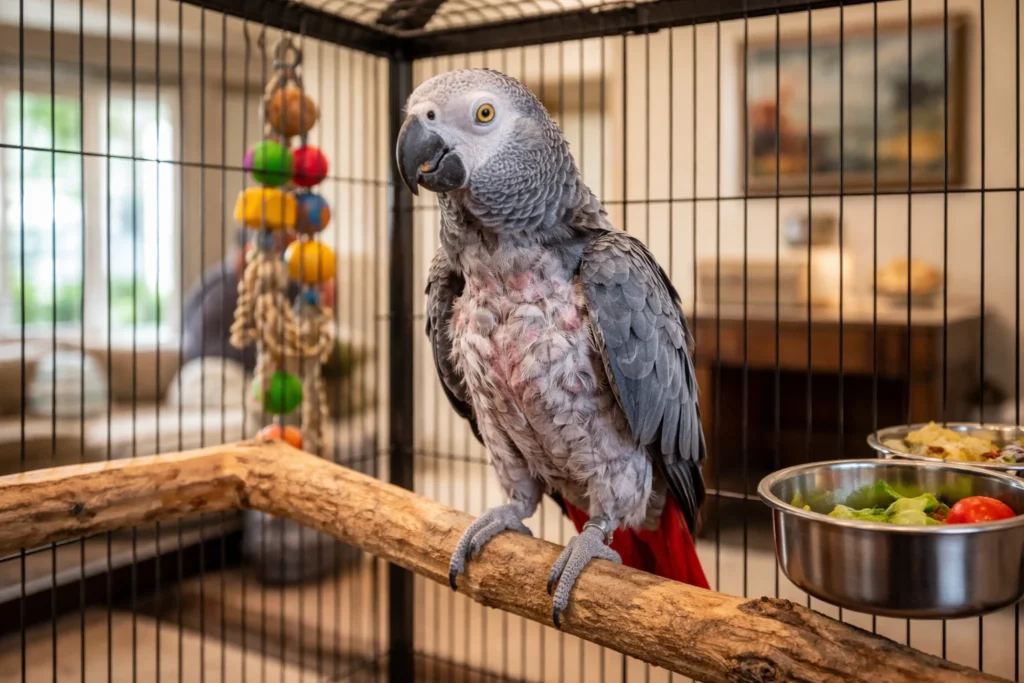
WHY DO BIRDS PLUCK THEIR FEATHERS? TOP 10 CAUSES
Understanding the cause of bird feather plucking is the most critical step toward finding the right solution. The causes can be broadly divided into two categories: medical causes and behavioral or psychological causes. In many cases, both may be present at the same time.
– MEDICAL CAUSES –
1. Skin Infections and Parasites
Bacterial, fungal, or yeast infections of the skin can cause intense itching and irritation, driving a bird to pluck compulsively. External parasites such as feather mites, lice, and scaly leg mites are also common culprits. If your bird is plucking in specific areas repeatedly and the skin appears red, crusty, or inflamed, a parasite or infection is a likely cause.
What to look for: Crusty or scaly skin, visible mites or lice (tiny moving dots), patchy feather loss in targeted areas.
2. Viral Infections
Certain viral diseases are directly linked to bird feather plucking. Psittacine Beak and Feather Disease (PBFD), caused by circovirus, is one of the most serious. It progressively destroys feather follicles, leading to abnormal feather growth and eventually permanent feather loss. Polyomavirus is another viral disease that can affect feather development, especially in young birds.
What to look for: Abnormal or deformed feather growth, symmetrical feather loss, overall weakness and lethargy.
3. Nutritional Deficiencies
A poor diet is a surprisingly common trigger for bird feather plucking. Birds fed only seeds often lack essential nutrients, including Vitamin A, calcium, amino acids, and omega-3 fatty acids. These deficiencies affect feather quality, skin health, and even brain chemistry, all of which can trigger or worsen plucking behavior.
What to look for: Dull, brittle, or discolored feathers; flaky skin; poor beak condition.
4. Allergies
Like humans, birds can develop allergies to food, environmental factors, or airborne irritants. Common allergens include certain seeds, pellets, dyes in toys, cigarette smoke, air fresheners, scented candles, and cleaning products. Allergies cause skin inflammation and itching, which prompts the bird to pluck.
What to look for: Plucking that began after a diet change or a change in household environment.
5. Hormonal Imbalances
During breeding season, birds experience significant hormonal fluctuations. Chronic egg-laying in female birds and persistently elevated testosterone in males can both contribute to feather plucking. Hypothyroidism, while less common, can also cause skin and feather problems in birds.
What to look for: Seasonal pattern to plucking, signs of mating behavior, excessive egg-laying.
6. Internal Diseases and Organ Problems
Liver disease, kidney disease, and gastrointestinal disorders can all manifest as feather plucking. When internal organs are under stress, birds may feel discomfort or pain in the abdominal region and respond by over-preening the area. Heavy metal toxicity, particularly from lead or zinc, can also cause neurological symptoms that include feather plucking.
What to look for: Plucking concentrated around the abdomen and vent area, changes in droppings, and weight loss.
– BEHAVIORAL AND PSYCHOLOGICAL CAUSES –
7. Boredom and Lack of Mental Stimulation
Parrots are highly intelligent animals. In the wild, they spend hours foraging, exploring, socializing, and problem-solving. In captivity, without enough enrichment, toys, and interaction, a bird can become chronically bored. Feather plucking often develops as a displacement activity, a way to cope with understimulation.
What to look for: Plucking that worsens when the bird is alone or inactive; a sparse, unstimulating cage environment.
8. Stress and Anxiety
Environmental stress is one of the leading causes of behavioral bird feather plucking. Sudden changes in routine, a new pet in the house, a new baby, moving to a new home, a change in the owner’s schedule, or even rearranging the furniture can trigger anxiety in sensitive birds. Chronic stress overstimulates the nervous system, making repetitive behaviors like feather plucking feel calming and compulsive at the same time.
What to look for: Plucking that started after a major life change; bird appears tense, fearful, or hypervigilant.
9. Loneliness and Separation Anxiety
Many parrot species are flock animals by nature. They form deep, lasting bonds with their flock in the wild, or with their human owners in captivity. When a bonded bird is left alone for long periods, it can experience genuine separation anxiety, which often manifests as feather plucking. This is especially common in highly social species like African Greys, Cockatoos, and Conures.
What to look for: Plucking that occurs mainly when the owner is away; excessive screaming or calling before plucking episodes.
10. Habitual or Compulsive Plucking
In some birds, feather plucking that started for a specific reason becomes a deep-seated habit or obsessive-compulsive behavior even after the original trigger is resolved. The act of plucking releases endorphins, making it self-reinforcing. Over time, it becomes an ingrained loop that is difficult to break without behavioral intervention.
What to look for: Long history of plucking with no clear current trigger; bird plucks in a trance-like, repetitive manner.
WARNING SIGNS AND STAGES OF FEATHER PLUCKING
Catching a bird’s feather plucking early can make a dramatic difference in the outcome. Here are the progressive warning signs to watch for:
STAGE 1 – Early Signs (Mild):
– Excessive preening beyond normal grooming
– Chewing or fraying of feather tips
– Small amounts of feather debris in the cage
– Slight dullness or patchiness in the plumage
STAGE 2 – Moderate:
– Noticeable bald patches on the chest, belly, or inner wings
– Broken or misshapen feathers
– Skin appears irritated or red in affected areas
– Bird preens obsessively, especially when stressed
STAGE 3 – Severe:
– Large areas of bare skin exposed
– Bleeding or open wounds from over-plucking
– Self-mutilation, the bird chews into its own skin
– Severe stress behaviors including screaming, rocking, or aggression
IMPORTANT: If your bird reaches ‘Stage 3‘, “veterinary attention is urgent“. Self-mutilation can lead to serious infection and life-threatening complications.
HOW TO DIAGNOSE BIRD FEATHER PLUCKING
Proper diagnosis is essential before starting any treatment. Never assume a cause without ruling out medical issues first. Here is the recommended diagnostic process:
Step 1 – Visit an Avian Veterinarian
An avian vet (one who specializes in birds) should always be your first stop. A general vet may not have the specialized knowledge needed for accurate bird diagnosis.
Step 2 – Physical Examination
The vet will thoroughly examine your bird’s skin, feather follicles, beak, and overall body condition to look for signs of infection, parasites, or physical injury.
Step 3 – Diagnostic Tests
Depending on findings, the vet may recommend:
– Blood panel (to check organ function, hormone levels, and nutritional status)
– Feather and skin swabs (to test for bacterial or fungal infection)
– DNA or PCR testing (to screen for PBFD, polyomavirus, and other viral diseases)
– Fecal exam (to check for internal parasites)
– Heavy metal screening (for lead or zinc toxicity)
– X-rays (to assess internal organs)
Step 4 – Behavioral History Assessment
Once medical causes are ruled out or treated, the vet or a certified parrot behavior consultant will take a detailed history of your bird’s environment, daily routine, diet, and social interactions to identify potential behavioral triggers.
HOW TO STOP BIRD FEATHER PLUCKING – PROVEN SOLUTIONS
There is no single magic cure for bird feather plucking. A successful recovery plan typically involves addressing medical causes, improving the bird’s environment, enhancing mental stimulation, and rebuilding emotional security. Here are the most effective, vet-approved strategies:
– MEDICAL TREATMENTS –
1. Treat Underlying Infections or Parasites
If a skin infection, bacterial issue, fungal overgrowth, or mite infestation is confirmed, your vet will prescribe the appropriate antifungal, antibiotic, or antiparasitic treatment. Treating the root infection often resolves the plucking relatively quickly.
2. Antiviral Management for PBFD
Unfortunately, there is no cure for PBFD. However, supportive care, stress reduction, and nutritional optimization can slow its progression and improve quality of life. Regular veterinary monitoring is essential.
3. Hormonal Therapy
If hormonal imbalance is the confirmed cause, your vet may recommend hormonal injections or implants (such as Lupron/leuprolide acetate) to manage chronic egg-laying or excessive testosterone production.
4. Nutritional Supplementation and Diet Overhaul
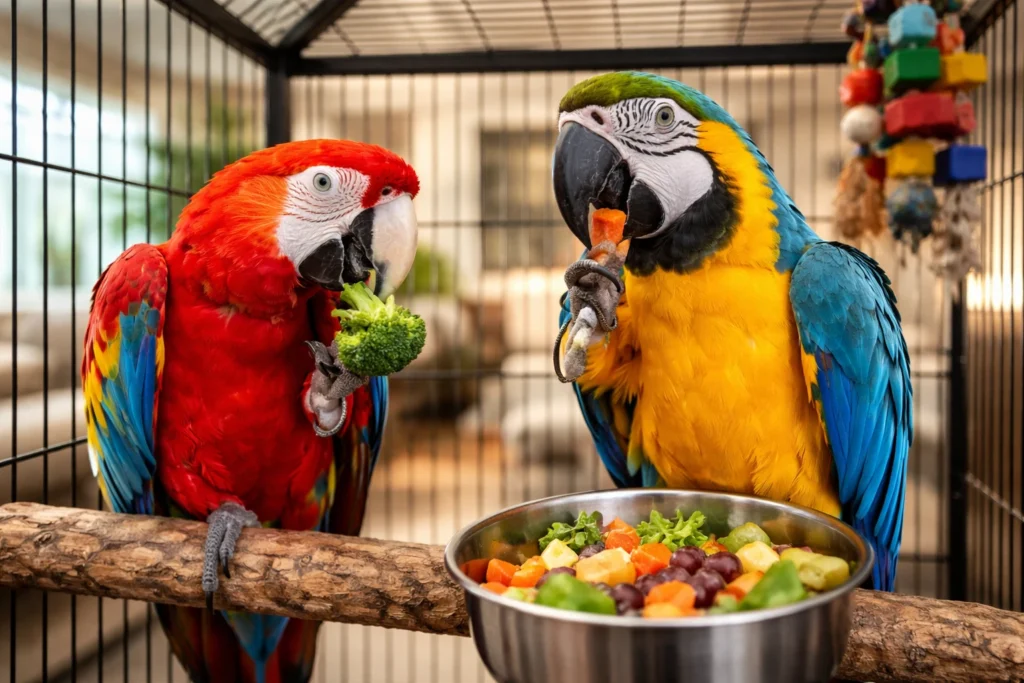
Switching from an all-seed diet to a high-quality pellet-based diet is one of the most impactful changes you can make. Pellets provide a nutritionally complete, balanced diet. Supplement with:
– Fresh vegetables (leafy greens, carrots, peppers)
– Fresh fruits (in moderation, high in sugar)
– Healthy proteins (cooked eggs, legumes)
– Omega-3 fatty acids (from flaxseed or fish oil drops specifically formulated for birds)
– Avoid avocado, chocolate, onion, and caffeine, these are toxic to birds
– ENVIRONMENTAL AND BEHAVIORAL SOLUTIONS –
5. Increase Environmental Enrichment
A stimulated bird is a healthier bird. Transform your bird’s cage and surrounding space into a mentally engaging environment:
– Rotate toys every few days to maintain novelty
– Provide foraging toys that require the bird to work for its food
– Offer natural wood perches of varying widths and textures
– Add bird-safe shreddable toys (palm leaves, cork, wicker)
– Provide puzzle feeders and treat-dispensing toys
– Allow supervised out-of-cage time every day
6. Increase Social Interaction and Bonding Time
If your bird is plucking due to loneliness or separation anxiety, increasing quality time with your bird is critical. This does not mean being with your bird 24/7, which can create over-dependency. Instead, establish a consistent, predictable daily routine:
– Morning and evening bonding sessions
– Talk to your bird regularly throughout the day
– Teach tricks using positive reinforcement training
– Consider a bird-safe companion (consult your vet and introduce slowly)
7. Reduce Stress Triggers
Audit your home environment for potential stressors:
– Place the cage in a calm, draft-free area of the home
– Avoid placing the cage near windows where outdoor predators (cats, hawks) may be visible
– Maintain a consistent daily schedule birds thrive on routine
– Use a cage cover at night to ensure 10-12 hours of dark, quiet sleep
– Reduce exposure to loud noise, strong scents, and cigarette smoke
– Avoid sudden changes in the household when possible
8. Behavioral Training and Desensitization
For birds with anxiety-driven plucking, behavior modification training can be highly effective:
– Target training (teaching the bird to touch a stick with its beak) provides mental engagement and builds confidence
– Desensitization to stressors through gradual, positive exposure
– Reward calm behavior and ignore plucking episodes (do not scold, it reinforces attention-seeking)
– Work with a certified parrot behavior consultant for severe cases
9. Use of E-Collars (As a Last Resort)
An Elizabethan collar (e-collar) is a cone-shaped device placed around the bird’s neck to physically prevent it from reaching its feathers. While this can stop immediate feather damage, it does not address the underlying cause and can increase stress. E-collars should only be used under direct veterinary guidance, typically in severe self-mutilation cases while the underlying cause is being treated.
10. Medication for Compulsive Plucking
In cases of deeply entrenched compulsive feather plucking, a veterinarian may prescribe psychiatric medications similar to those used in humans with OCD:
– Clomipramine (a tricyclic antidepressant)
– Haloperidol (an antipsychotic used in severe cases)
– Fluoxetine or other SSRIs
These medications are not a standalone solution but can help break the compulsive cycle while other behavioral and environmental changes take effect. Always use under strict veterinary supervision.
NATURAL AND HOME REMEDIES – DO THEY WORK?
Many bird owners look for natural remedies to help with bird feather plucking. While these are not substitutes for veterinary care, some supportive measures can complement your bird’s treatment plan:
Aloe Vera Spray:
Diluted, food-grade aloe vera gel mixed with water can be misted onto the bird’s feathers and skin. It soothes irritated skin, relieves itching, and encourages preening in a healthier, less destructive way. Make sure the aloe vera product is 100% pure and contains no alcohol, fragrances, or additives.
Regular Bathing:
Many birds pluck more when their skin is dry and itchy. Offering regular baths or misting sessions (2-3 times per week) keeps skin hydrated and feathers in good condition. Use plain lukewarm water, never soap or shampoo unless specifically prescribed by an avian vet.
Lavender Aromatherapy:
Very diluted lavender essential oil, diffused in a room with good ventilation and never applied directly, has been reported by some bird owners to have a calming effect. However, many essential oils are toxic to birds. Always consult your avian vet before using any aromatherapy around birds.
Herbal Supplements:
Some avian vets recommend natural supplements like milk thistle (for liver support), chamomile (for calming), or spirulina (for nutritional boost). These should always be used in bird-safe formulations and with veterinary guidance.
“CAUTION: Do not apply human lotions, creams, tea tree oil, or any over-the-counter skin products to your bird without vet approval. Many substances that are safe for humans are toxic or harmful to birds.“
PREVENTING BIRD FEATHER PLUCKING – LONG-TERM STRATEGIES
Prevention is always better than a cure. Here is how to create a lifestyle for your bird that significantly reduces the risk of feather plucking ever developing:
1. Annual Veterinary Check-Ups
Take your bird to an avian vet at least once a year, even if it appears healthy. Many underlying conditions, such as nutritional deficiencies, early infections, and organ issues, can be caught and treated before they trigger feather plucking.
2. Feed a Balanced, Varied Diet From Day One
Do not rely solely on seeds. A high-quality pellet diet combined with a variety of fresh vegetables, fruits, and healthy proteins provides the nutritional foundation for healthy feathers and a healthy mind. Introduce dietary variety from a young age to prevent picky eating habits.
3. Create a Stable, Enriching Environment
From the day you bring your bird home, commit to providing an enriching, stimulating environment. This means plenty of toys, foraging opportunities, out-of-cage time, and consistent positive social interaction.
4. Establish and Maintain a Daily Routine
Birds feel most secure when their daily schedule is predictable. Feed, interact, and allow out-of-cage time at roughly the same times each day. Consistent sleep schedules (10-12 hours of darkness per night) also support hormonal health and emotional stability.
5. Socialize Your Bird Thoughtfully
Expose your bird to different people, sounds, and situations from a young age, in a positive, non-threatening way. A well-socialized bird is more resilient to stress and environmental changes.
6. Avoid Common Household Toxins
Cigarette smoke, non-stick cookware fumes (PTFE/Teflon), scented candles, air fresheners, cleaning products, and strong perfumes can all irritate a bird’s respiratory system and skin, potentially triggering feather plucking. Keep your bird’s environment as clean and chemical-free as possible.
7. Monitor Feathers and Skin Regularly
Make it a habit to gently examine your bird’s feathers and skin during your daily interaction. Catching early signs of feather damage, skin irritation, or unusual molt patterns allows you to act quickly before a minor issue becomes a major problem.
CONCLUSION
Bird feather plucking is one of the most complex and emotionally challenging issues a bird owner can face. It is not a sign of failure on your part, nor is it necessarily a permanent condition. It is your bird’s way of communicating that something is wrong, whether physical, emotional, or environmental, and it deserves a thoughtful, compassionate response.
The key takeaways from this guide are:
– Never ignore feather plucking, even in its early stages
– Always rule out medical causes first with an avian veterinarian
– Address diet, enrichment, and emotional needs together
– Be patient, recovery takes time, especially in chronic cases
– Prevention through a healthy, enriching lifestyle is always the best approach
Your bird depends entirely on you to recognize the signs, seek the right help, and create the conditions it needs to thrive. With knowledge, commitment, and love, most birds can make a remarkable recovery from feather plucking and go on to live happy, healthy, fully feathered lives.
If you found this article helpful, share it with fellow bird lovers and subscribe to more expert pet care guides.