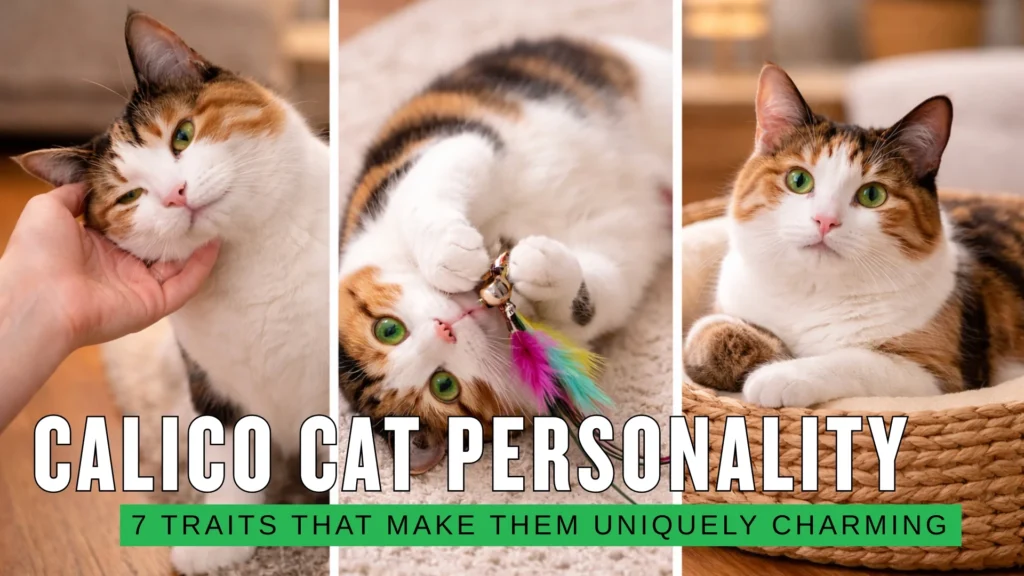

Calico cat personality is shaped largely by genetics, breed, and individual temperament. These cats are known for being sassy, loyal, independent, and surprisingly affectionate, often all at the same time.
If you have ever shared your home with a calico cat, you already know there is something remarkably special about them. Beyond their stunning tri-color coats of white, orange, and black, calico cat personality is a topic that cat lovers around the world find endlessly fascinating. Are they really feistier than other cats? Do they form deep bonds with their owners? And why do so many people describe calico cats as having a “whole personality” unlike any other feline?
In this comprehensive guide, we explore everything you need to know about calico cat personality, from their bold independence to their unexpected bursts of affection. Whether you are considering adopting one or simply curious about your current calico companion, this article will give you deep insight into what makes these cats truly one of a kind.
WHAT IS A CALICO CAT?
Before diving into calico cat personality traits, it helps to understand what a calico cat actually is. “Calico” is not a breed; it is a coat color pattern. A calico cat displays three distinct colors: white, orange (or red), and black (or dark brown). This tri-color pattern is the result of a fascinating genetic phenomenon.
The gene responsible for orange and black coloration is carried on the X chromosome. Since female cats have two X chromosomes (XX), they can express both colors. Male cats (XY) typically only express one, which is why approximately 99.9% of all calico cats are female. Male calico cats are extremely rare and are almost always sterile due to a chromosomal anomaly called Klinefelter Syndrome (XXY).
Because calico is a coat pattern, you can find calico coloring across dozens of breeds, including Maine Coon, Persian, American Shorthair, Japanese Bobtail, and more. This means that calico cat personality can vary depending on the breed; however, many owners report a consistent set of personality traits across all calico cats regardless of breed.
DOES COAT COLOR REALLY AFFECT PERSONALITY? THE SCIENCE BEHIND IT
You might wonder: can the color of a cat’s coat really influence its personality? The answer is more nuanced than a simple yes or no. A landmark study conducted by researchers at the University of California Davis in 2015 surveyed over 1,200 cat owners and found a statistically significant correlation between coat color/pattern and specific behavioral traits.
The study found that calico and tortoiseshell cats were rated significantly higher in aggression toward humans, including hissing, biting, and swatting, compared to cats of other colors. Importantly, “aggression” in this context does not mean dangerous or unloving; it means a more assertive, opinionated, and spirited personality.
The reason may lie in the same X chromosome gene that determines coloration. The gene for orange coat color is closely linked to genes that regulate serotonin, a neurotransmitter strongly associated with mood, behavior, and temperament. This means calico cats may be genetically predisposed to more complex emotional behavior, giving them that signature bold and unpredictable personality calico cat owners know so well.
CALICO CAT PERSONALITY: THE 7 TRAITS
Now, for the heart of the matter, the 7 defining personality traits that make calico cats unlike any other feline companion. Whether your calico is a fluffy Persian or a sleek American Shorthair, chances are you will recognize most of these traits.
TRAIT #1: FIERCELY INDEPENDENT
One of the most well-known aspects of calico cat personality is their fierce sense of independence. Unlike some cat breeds that follow their owners from room to room, seeking constant validation, calico cats operate on their own schedule and are perfectly happy about it.
Calico cats decide when they want affection and when they want to be left alone. If you pick up your calico for a cuddle at the wrong moment, you will likely receive a very clear signal: a tail flick, a flat-eared stare, or a swift leap off your lap. However, this independence is also what makes calico affection feel genuinely earned. When a calico cat chooses to curl up next to you, it means something.
This trait can be challenging for first-time cat owners who expect a lap cat. But for those who appreciate feline autonomy, a calico’s independence is one of their most admirable qualities.
TRAIT #2: DEEPLY LOYAL TO THEIR CHOSEN PERSON
Despite their independence, calico cats are famous for forming deep, unshakeable bonds with one specific person in the household, often referred to as “their human.” This loyalty is one of the most endearing aspects of calico cat personality and is frequently described by calico owners as dog-like in its intensity.
Your calico may be standoffish with houseguests and tolerant but distant with other family members, yet follow you specifically to every room, greet you at the door when you return home, and insist on sleeping on your side of the bed. This selective loyalty is deeply rooted in the calico’s temperament.
Research on feline attachment supports this. A 2019 study published in Current Biology found that cats form secure attachments to their owners similar to the bonds that dogs and even human infants form. Calico cats, with their intense one-person loyalty, are often cited as a prime example of this attachment style.
TRAIT #3: BOLD AND ASSERTIVE (THE “TORTITUDE” FACTOR)
Cat enthusiasts have coined the term “tortitude” to describe the sassy, opinionated temperament common in tortoiseshell and calico cats. And it is a remarkably accurate description. Calico cats are not shy about voicing their opinions. They will tell you when they are hungry, when they want playtime, when you are sitting in their favorite spot, and when you have overstayed your welcome in their personal space.
This boldness expresses itself in several ways. Calico cats are often the first to investigate a new object in the house, the first to confront a new pet, and the most vocal when their routine is disrupted. They have strong preferences for food textures, sleeping spots, and playtime types, and they will make those preferences known.
While this assertiveness can occasionally veer into stubbornness, most calico owners find it charming. Living with a calico cat is like living with a roommate who always has opinions, and who is never afraid to share them.
TRAIT #4: PLAYFUL AND HIGH-ENERGY
Another defining characteristic of calico cat personality is their playfulness. Calico cats tend to retain a kitten-like enthusiasm for play well into adulthood. They are curious, agile, and easily entertained by toys, puzzles, and even household objects like paper bags or cardboard boxes.
Interactive play is especially important for calico cats. Feather wands, laser pointers, and puzzle feeders are ideal because they engage both their physical energy and their sharp, curious minds. A calico cat that does not get enough mental and physical stimulation may channel that energy into less desirable behaviors such as knocking things off counters, pouncing on sleeping owners, or rearranging your belongings.
If you have a calico kitten, be prepared for a period of intense energy. Most calico owners describe the first two years as an entertaining but exhausting whirlwind. By age three or four, calico cats typically settle into a more balanced rhythm of activity and rest.
TRAIT #5: SURPRISINGLY AFFECTIONATE (ON THEIR OWN TERMS)
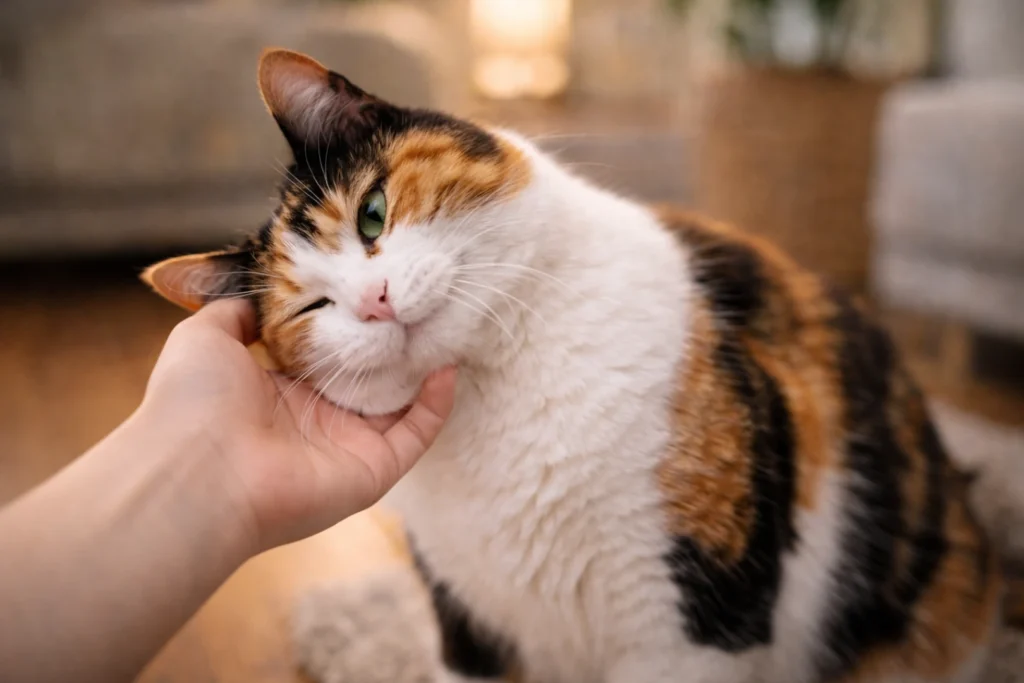
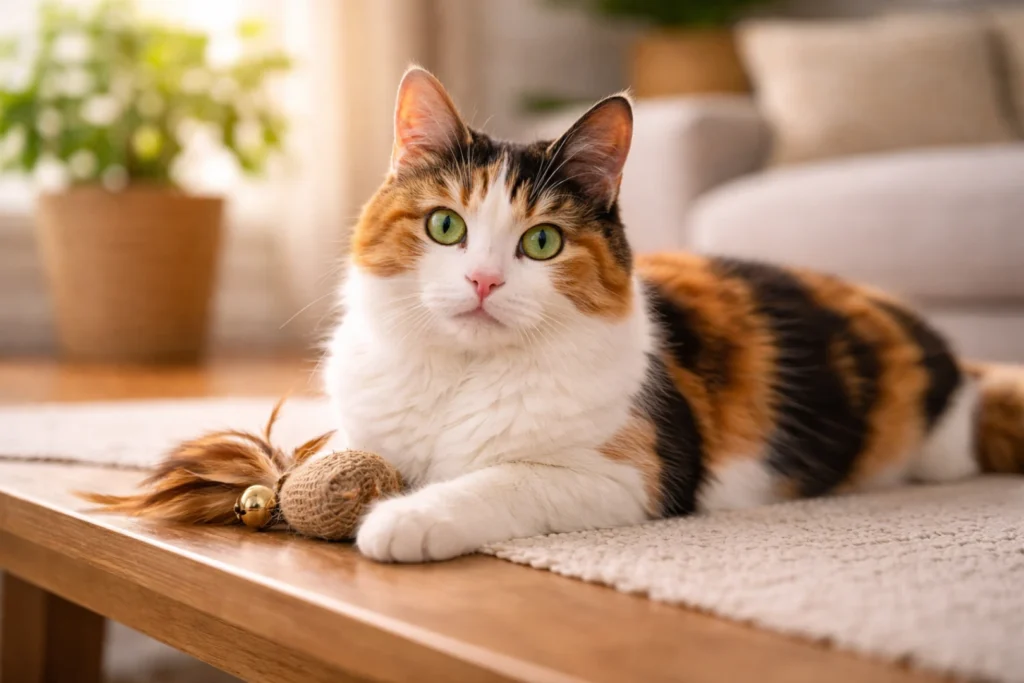
Calico cats have a reputation for being aloof, and while they certainly value their independence, they are also capable of profound affection. The key phrase here is “on their own terms.” Calico cats do not respond well to forced affection; being held, kissed, or petted against their will will earn you a swift retreat. But when they choose to be affectionate, calico cats are deeply loving.
Common affectionate behaviors in calico cats include slow blinking (the feline equivalent of a kiss), head bunting (pressing their forehead against yours), kneading on your lap, grooming your hair or hands, and vocalizing softly in response to your voice. If your calico does any of these things, you can be confident that you have earned a privileged spot in their heart.
The trick to unlocking calico affection is patience and respect for their boundaries. Never force interaction. Let your calico come to you, and reward that trust with gentle, consistent affection. Over time, most calico cats become noticeably more loving as the bond between cat and owner deepens.
TRAIT #6: VOCAL AND COMMUNICATIVE
If you share your home with a calico cat, you probably already know that silence is not their default setting. Calico cats are among the more vocal cat varieties, using a wide range of sounds to communicate with their owners. From soft chirps and trills to loud meows and indignant yowls, calicos have a rich vocal vocabulary.
Research has shown that cats develop their vocal communication specifically in response to humans. Wild cats rarely meow at each other; they use body language instead. The meowing that domesticated cats display is essentially a language developed to communicate with their human companions. Calico cats, with their assertive personalities, seem to have developed particularly expressive versions of this communication.
Pay attention to the different sounds your calico makes. A short chirp usually means a friendly greeting. A rising meow is typically a request or demand. A long, drawn-out yowl often signals discomfort, frustration, or the urgent need for breakfast at 5 AM.
TRAIT #7: INTELLIGENT AND PERCEPTIVE
The seventh defining trait of calico cat personality is intelligence. Calico cats are sharp, perceptive, and highly observant. They pay close attention to their environment and to the humans around them, and they are quick to learn routines, patterns, and cause-and-effect relationships.
This intelligence manifests in fascinating ways. Calico cats often figure out how to open cabinet doors, manipulate latches, and locate hidden treats. They observe and learn from watching humans perform tasks. Many calico owners report that their cats seem to understand full sentences and respond to conversational cues rather than just simple commands.
This perceptiveness also means calico cats are highly attuned to their owner’s emotional state. Many calico owners report that their cat seems to “know” when they are sad, stressed, or unwell — and will often increase affectionate behavior during those times. This emotional intelligence is one of the most touching and widely reported aspects of calico cat personality.
CALICO CAT PERSONALITY VS. OTHER CAT COLORS: A COMPARISON
To better understand what makes the calico personality distinctive, it helps to compare it with other common coat color personalities. While every cat is an individual, general tendencies have been observed and documented through owner surveys and behavioral research.
| Coat Color | Common Personality Traits | Best For |
| Calico | Bold, independent, loyal, vocal, intelligent, feisty | Experienced cat owners who appreciate feline complexity |
| Orange/Ginger | Friendly, sociable, laid-back, affectionate, food-motivated | Families and first-time cat owners |
| Black | Mysterious, calm, curious, adaptable, resilient | Low-maintenance owners |
| White | Shy, gentle, quiet, sensitive, reserved | Peaceful, calm households |
| Tortoiseshell | Similar to calico: assertive, vocal, strong-willed | Owners familiar with “tortitude” |
| Tabby | Highly variable; typically social, playful, adaptable | Almost any household |
HOW TO LIVE HAPPILY WITH A CALICO CAT: 6 PRACTICAL TIPS
Understanding calico cat personality is the first step. The next step is knowing how to build a healthy, happy relationship with your calico companion. Here are six practical, proven tips recommended by calico owners and feline behaviorists.
- RESPECT THEIR BOUNDARIES
Never force interaction with your calico. If they pull away from a cuddle, let them go. Forcing affection damages trust and increases stress. Instead, let your calico dictate the terms of physical contact. The more you respect their autonomy, the more affectionate they will become over time. - ESTABLISH A CONSISTENT ROUTINE
Calico cats thrive on routine. Feed them at the same times each day, schedule regular play sessions, and keep their environment as predictable as possible. Calicos are sensitive to change, and a disrupted schedule can trigger stress behaviors such as over-grooming or increased aggression. - PROVIDE PLENTY OF ENRICHMENT
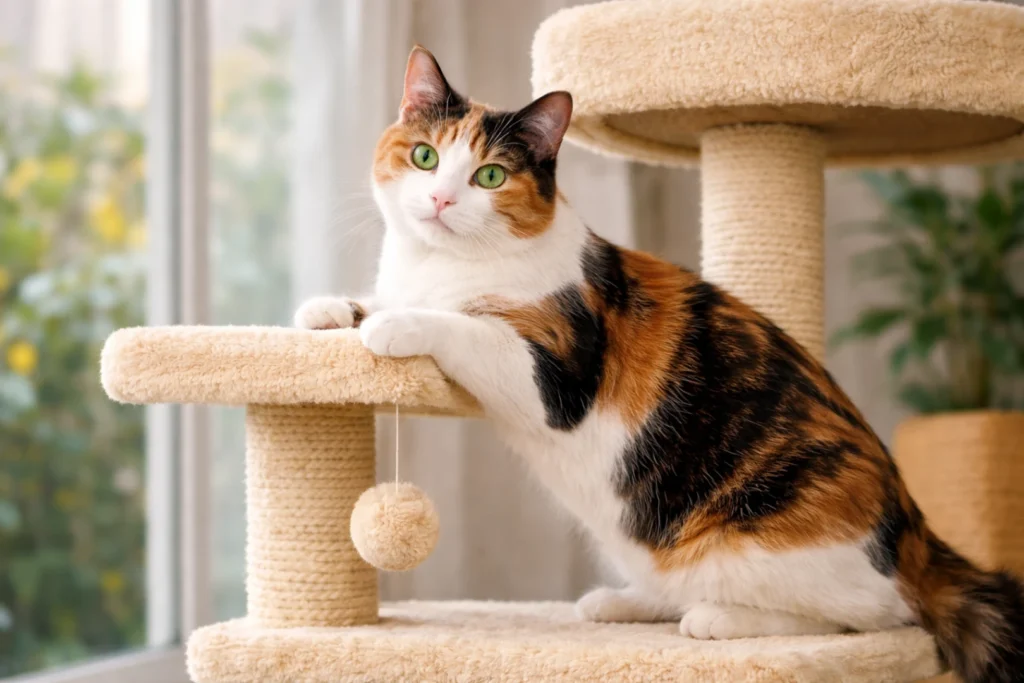
Given their intelligence and energy levels, calico cats need mental stimulation. Invest in a cat tree, window perches, puzzle feeders, and rotating toy collections. A bored calico is a mischievous calico. Enrichment keeps their minds sharp and their behavior positive. - USE POSITIVE REINFORCEMENT
Calico cats do not respond well to punishment. Scolding or negative reinforcement will damage your relationship and increase stress-related behaviors. Instead, use positive reinforcement, treats, praise, and play to reward the behaviors you want to encourage. - GIVE THEM A SAFE SPACE
Every calico needs a place that is entirely their own, a high perch, a cozy corner, or a dedicated cat bed where they can retreat when overwhelmed. This is especially important in busy households. A safe space reduces anxiety and gives your calico a sense of control over their environment. - SOCIALIZE EARLY AND GENTLY
If you are raising a calico kitten, early socialization is crucial. Expose them to a variety of people, sounds, and experiences in a positive, low-stress way. Well-socialized calico kittens grow into more confident, adaptable adults who are easier to live with and less prone to anxiety.
ARE CALICO CATS GOOD FOR FAMILIES WITH CHILDREN?
This is one of the most frequently searched questions about calico cat personality, and the answer depends greatly on the specific cat and the family. Generally speaking, calico cats can be wonderful family pets, but they require a household that understands and respects feline boundaries.
Calico cats can be very gentle and playful with children who know how to interact with cats appropriately. They can form strong bonds with kids who are calm, patient, and respectful. However, a calico cat will not tolerate rough handling, being chased, or having their tail pulled. In those situations, a calico will communicate its displeasure clearly, sometimes with a swat or a bite.
The recommendation for families with young children (under age five) is to supervise all interactions and teach children from an early age how to approach, pet, and interact with a cat gently. With proper guidance, a calico cat can become a beloved, loyal companion for children, modeling empathy, patience, and respect in the process.
CALICO CAT PERSONALITY AROUND OTHER PETS
Given their assertive, territorial nature, introducing a calico cat to other pets requires careful management. Calico cats are not naturally aggressive toward other animals, but they do have a strong sense of territorial ownership and a low tolerance for challenges to their status.
WITH OTHER CATS:
Calico cats can coexist peacefully with other cats, particularly if introduced gradually and carefully. The classic “slow introduction” method, separating cats at first, then allowing supervised interaction over several weeks, works very well for calicos. Avoid introducing a high-energy, dominant male cat into a calico’s established territory, as this is likely to result in prolonged conflict.
WITH DOGS:
Calico cats can get along very well with dogs, particularly those that are gentle and not inclined to chase. Many calico owners report that their calico quickly establishes dominance in a cat-dog household and that the dog happily defers to the calico’s authority. A dog that respects the calico’s boundaries will often earn a tolerant, occasionally even affectionate relationship in return.
CALICO CAT HEALTH AND LIFESPAN: WHAT TO EXPECT
Since calico is a color pattern rather than a breed, calico cats do not have a specific set of breed-related health issues. Their health and lifespan depend primarily on their breed, genetics, diet, and quality of veterinary care. A healthy domestic calico cat typically lives between 12 and 16 years, with many reaching their late teens in good health.
Male calico cats, which result from a chromosomal anomaly, have specific health considerations. Their XXY chromosomal makeup can predispose them to conditions such as joint pain, heart disease, and metabolic disorders. Because of this, male calico cats often have shorter lifespans than females and typically require more attentive veterinary care.
For female calico cats, routine veterinary care, including annual checkups, vaccinations, dental care, and spaying, is the best investment you can make in their long-term health. Spaying your calico will also help manage any hormonally influenced personality traits such as increased vocalization, restlessness, and territorial marking during heat cycles.
FAMOUS CALICO CATS THROUGHOUT HISTORY AND CULTURE
Calico cats have held a special place in human culture for centuries. In Japan, the Maneki-neko (“beckoning cat”), the iconic figurine seen in shops and restaurants, is almost always depicted as a calico, believed to bring good luck and prosperity. Japan even named the calico cat as their official cat in 2001.
In the United States, calico cats hold the distinction of being the official state cat of Maryland, selected in 2001 because their tri-color coat mirrors the black, orange, and white colors of the Baltimore Oriole (the state bird) and the Baltimore Checkerspot butterfly (the state insect).
Perhaps the most famous real-life calico cat is Tama, a Japanese calico who served as the stationmaster of Kishi Station in Wakayama, Japan. Tama wore a tiny stationmaster’s hat, greeted passengers daily, and became a national celebrity credited with saving the struggling railway line and attracting over 1.8 billion yen in tourism revenue. When Tama passed away in 2015, she was given an official state funeral and enshrined as a goddess at a local Shinto shrine.
CONCLUSION: WHY CALICO CAT PERSONALITY IS TRULY ONE OF A KIND
Calico cat personality is a rich, complex tapestry of independence, loyalty, boldness, intelligence, affection, and vocal expression. These are cats that demand respect, reward patience, and form bonds of extraordinary depth with the humans lucky enough to earn their trust.
Their genetic uniqueness is almost exclusively female, their coloring tied to the very chromosomes that may influence their temperament, which makes calico cats one of the most fascinating animals in the domestic world. They are not cats for everyone. They require understanding, patience, and a willingness to meet them on their own terms. But for those who do, the reward is a companion of remarkable personality, intelligence, and heart.
If you are considering adding a calico cat to your family, approach it with open eyes and an open heart. Learn their language, respect their boundaries, and engage with their curious minds. Do that, and your calico will repay you with a loyalty and affection that is nothing short of extraordinary.